

 David Lane
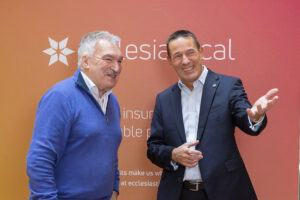
 David Lane, MD of Ecclesiastical Insurance Ireland (proudly part of the Benefact Group), tells The Irish Catholic podcast, Education Nation, why the company’s unique ownership model means its profits go to charity — and why that matters for Catholic institutions

Most people regard paying an insurance premium as, in David Lane’s words, a grudge purchase. Nobody wakes up in the morning delighted to be writing the cheque. But what if the company cashing that cheque was giving its distributable profits away? Not to shareholders, not to directors, but to charitable causes — over €250 million of them in the past decade alone.
That is the reality of Ecclesiastical Insurance, the specialist insurer whose Irish managing director sat down recently with the Education Nation podcast and its host Nicky Cuddihy, to explain a business model that is, in the truest sense, unique.
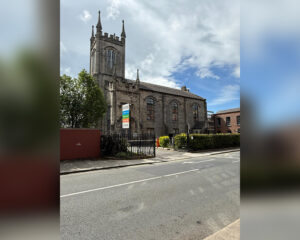
Ecclesiastical is not a household name in Ireland, at least not in Catholic households. Founded 135 years ago to provide insurance for the Anglican Church, it arrived in Ireland about 45 years ago through the Church of Ireland portfolio, insuring everything from large Cathedrals like Christ Church and St Patrick’s, to rural parish churches across the country. For many Irish Catholics, the company has simply been off the radar — associated, if at all, with another tradition.
That, says Lane, is something he is keen to change.

A different kind of company
Lane himself came to Ecclesiastical by a circuitous route. Educated at Clongowes Wood College and UCD, he built a career across some of the biggest names in financial services — Coyle Hamilton, Irish Life Finance, Transamerica, and then twelve years with General Electric, leading GE Financial Insurance businesses across Ireland, the UK and a large part of Western Europe. By the time he joined Ecclesiastical in 2012, he had spent years travelling three or four days a week and the move, he says, was partly about getting home to spend more time with his children.
What he found when he arrived was something genuinely unlike any other insurance company. The difference is not in what Ecclesiastical does — it operates as a normal insurance company, subject to regulatory requirements, offering general insurance products across four specialist sectors: faith, education, heritage and charity. The difference is in what happens to the money afterwards.
By 2025, the cumulative total given to charity over roughly a decade had reached €250 million — closer to €275 million now”
Ecclesiastical is owned by the Benefact Trust — a charitable organisation regulated by the Charity Regulator in the UK. All distributable profits flow from Ecclesiastical into the Benefact Group and then into Benefact Trust. There are no external shareholders extracting returns. When the business makes money, the money goes to good causes.
The scale of this is striking. In 2013, Lane recalls, at a time when Ecclesiastical was actually losing business, the company set itself a target of giving €50 million to charity over five years. The day after the commitment was made, he says, they looked at each other and wondered what on earth they had done. Yet they hit the target ahead of schedule! By 2025, the cumulative total given to charity over roughly a decade had reached €250 million — closer to €275 million now.
What they insure
The four pillars of Ecclesiastical’s business in Ireland are faith, education, heritage and charity. Faith is the most straightforward: churches, from cathedrals to country parishes. Education covers primary and secondary schools as well as third level institutions. Heritage, defined as any building more than a hundred years old, takes in art galleries, museums and theatres — the National Gallery, the National Opera House in Wexford, the Abbey and the Gate — as well as a range of well-known heritage hotels. Charity covers any not-for-profit organisation operating in Ireland.
It is a portfolio that, when one thinks about it, touches daily life in a way most people never consider. As David puts it, a day doesn’t pass without most of us interacting with one of these buildings, one of these charities, one of these schools or churches. Ecclesiastical, in a quiet way, is playing a part in underwriting the fabric of Irish civil and religious society.
Most of the business is intermediated — sold through insurance brokers — though about ten per cent is direct, much of it the church business, including primary schools. And it is not exclusively a Church of Ireland or Protestant concern. Ecclesiastical will insure any religion. It already insures some Catholic schools, and is actively seeking to grow that relationship. Any Catholic school or institution, Lane says, is welcome to have a conversation.
Ecclesiastical is there, it is open for that business, and crucially, any premium paid to it feeds ultimately into a Charitable Trust”
This is perhaps the point that deserves most emphasis for readers of this newspaper. There was historically a company called Church and General that was the Catholic equivalent of Ecclesiastical, providing insurance for Catholic churches and schools across Ireland. That company is now part of the Allianz group. It remains a significant player. But Ecclesiastical is there, it is open for that business, and crucially, any premium paid to it feeds ultimately into a Charitable Trust rather than into shareholder returns.
Giving it back
Beyond the Benefact Trust’s own grant-making — which tends to favour charities with a Christian ethos but extends more broadly, including a major mental health programme during Covid — Ecclesiastical operates its own charitable initiative called Movement for Good, launched in 2019. The concept was deliberately named a movement, Lane explains, to bring together like-minded people committed to making a positive contribution to society.
Each year, Movement for Good distributes around £1 million — or the equivalent — to charitable causes, split between smaller grants of £1,000, available to any registered charity through a simple online draw, and larger grants of up to £50,000 awarded through an application process. There is also a Twelve Days of Christmas initiative in which ten charities a day receive £1,000 in the run-up to Christmas, again selected at random once they are registered.
From an Irish perspective, last year Movement for Good distributed roughly £100,000 across around 25 charities. Across the group as a whole, more than 10,000 charities have been supported. Lane speaks with evident feeling about visiting smaller charities and seeing what they are able to do with a modest grant — the impact on the people they serve, he says, is extraordinary.
Among the charities Ecclesiastical has partnered with in Ireland are DePaul — formerly associated with the Society of St Vincent de Paul — which served as Ecclesiastical’s corporate charity partner for three years, receiving support for a graduate training programme and a mental health initiative for people experiencing homelessness. Children’s Books Ireland, which works to bring literacy to children from disadvantaged backgrounds, has also benefited from the initiative.
For any Catholic charity wishing to apply, the routes are movementforgood.com or the Benefact Group website — Benefact being the name of the wider group. A grant applications officer is now based in Ireland specifically to support the Benefact Trust’s application process, which is open to any organisation with a Christian ethos.
Wider questions
The interview also touches on questions that will resonate with Irish Catholic readers. Lane speaks candidly about the visible decline in church attendance — in his own local parish, where several Sunday Masses have become two, with modest congregations — and the challenge of what happens to church buildings as parishes amalgamate and priest numbers fall. He praises the Church of Ireland for proactively looking at how its properties might be repurposed, and expresses the hope that the Catholic Church is doing something similar.
From the outset that its reason for growing is to give more away. That clarity of purpose, he suggests, is a form of governance in itself”
On the question of governance — an area where both the charity sector and the education sector in Ireland have faced searching scrutiny in recent decades — Lane points to Ecclesiastical’s purpose as its own strongest safeguard. Everyone who joins the company, he says, knows from the outset that its reason for growing is to give more away. That clarity of purpose, he suggests, is a form of governance in itself.
It is, on reflection, an unusual thing: an insurance company whose managing director speaks not about market share or shareholder value but about life-changing careers that can change lives. The business case and the moral case, at Ecclesiastical, are one in the same. The premium you pay, if you are a Catholic school or charity, or a Catholic parish, goes — after expenses and after ensuring the business remains sound — to people who need it.