

 Eilis Mulroy
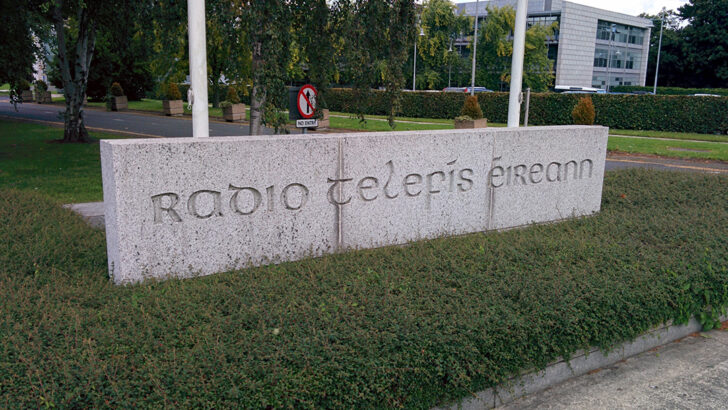 RTÉ in Donnybrook. Photo: Flickr / James Cridland.
 As pressure grows on RTÉ to conduct an audit into bias at the station, its decades-long handling of abortion provides the most compelling argument for doing so, writes Eilís Mulroy

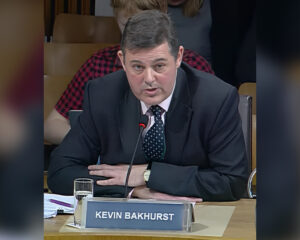
When RTÉ Director General Kevin Bakhurst appeared before the Oireachtas Media Committee recently, he was asked a straightforward question: would he support an audit examining diversity of opinion in RTÉ’s current affairs coverage?
His answer was anything but straightforward.
For a broadcaster trying to rebuild public trust after years of controversy, the reluctance to embrace greater scrutiny was telling. If RTÉ genuinely wants openness and transparency, an audit of how it handles contentious issues should not be feared – it should be welcomed.
And if such an audit ever happens, there is one topic that would make a compelling place to start: abortion.
Because if RTÉ’s coverage of abortion over the last 40 years were placed under serious examination, the findings could prove deeply uncomfortable for the national broadcaster.
To understand why, it is worth going back to September 8, 1983.
The votes had been counted. By a margin of 66.9%, the Irish electorate had voted to insert constitutional protection for the unborn child into the Constitution. The 8th Amendment recognised the right to life of both pregnant mothers and unborn children. It was a very decisive result, one of the most important social and political moments in modern Irish history.
Yet if you had switched on RTÉ that evening, you could have been forgiven for thinking the country had entered a period of national mourning rather than witnessed a major democratic victory.
On Today Tonight, RTÉ’s flagship current affairs programme at the time, viewers watched the leading voices from both campaigns discuss the result: lawyer and academic William Binchy representing the Pro Life Amendment Campaign, and Senator Mary Robinson from the Anti-Amendment side.
A ‘nasty emotive battle’, legal complications, women travelling abroad, future court challenges. The framing was all critical in tone and openly sceptical of what voters had just done”
The first sign that this was not going to be a neutral post-match analysis came immediately. Presenter John Bowman directed his opening question not to Binchy – whose side had secured the historic win – but to Robinson from the losing campaign.
What followed only made matters worse.
Questions directed at the pro-life side repeatedly returned to fears and consequences: a “nasty emotive battle”, legal complications, women travelling abroad, future court challenges. The framing was all critical in tone and openly sceptical of what voters had just done.
There was no attempt to understand why such a large majority had voted as it did, nor any recognition of people’s sincere motivations at a time when the rights of unborn babies were being steadily eroded elsewhere, making Ireland’s vote something markedly different – and historically significant.
The winners had barely any time to absorb their extraordinary success before RTÉ began explaining why they may not, in fact, have won after all.
Now jump ahead 35 years.
The scenes at Dublin Castle in 2018 could hardly have been more different.
RTÉ presenters spoke about “savouring this moment” as the result became clear and the crowd cheered and danced in support of abortion outside Dublin Castle.
At one point, an RTÉ presenter even asked aloud if the new abortion law should be referred to as “Savita’s Law” – reinforcing the unfounded claim that the 8th Amendment caused Savita Halappanavar’s death, in spite of multiple investigations showing that mismanaged sepsis and failures in medical treatment were the central factors.
Tone
For days after the referendum, the tone remained celebratory as the wall to wall coverage continued.
Whatever position one takes on abortion itself, the contrast in how Ireland’s national broadcaster approached the two referenda – in 1983 and in 2018 – could hardly have been more stark.
People have argued for years that RTÉ’s coverage of abortion overwhelmingly favours one perspective. Whether one agrees with that claim is almost secondary to another wider question: why does a publicly funded broadcaster facing persistent accusations of bias appear so reluctant to examine itself?
That question surfaced at the recent Oireachtas Committee meeting when Senator Rónán Mullen challenged Bakhurst directly about the need for an audit of RTÉ and said: “Of the €725 million that RTÉ has received to run operations over the current three-year period, how much of that has been earmarked for on-air programming that specifically investigates, challenges and interrogates RTÉ’s editorial policy in the interests of openness and transparency?”
Trust is not rebuilt through defensiveness. Nor is it restored by pretending concerns do not exist”
When Bakhurst struggled to give a direct answer, Mullen interjected: “I think the answer to that is none.”
It was an uncomfortable exchange because it touched on a deeper problem.
Trust is not rebuilt through defensiveness. Nor is it restored by pretending concerns do not exist.
A substantial section of Irish society believes RTÉ no longer reflects a genuine diversity of perspectives on contentious social issues. Whether management agrees or not, dismissing those concerns simply deepens public scepticism.
Former RTÉ senior producer Betty Purcell was unusually candid in her 2014 memoir Inside RTÉ when she described public broadcasting as “a continuation of politics by other means” and “a route to effecting social change.”
The striking thing about those comments was not what was said, but how rarely people inside RTÉ speak so openly about editorial culture.
Attitudes
Media narratives shape public attitudes over time. Four decades of skewed coverage on the abortion issue undoubtedly had a profound effect on how society understood, discussed and ultimately voted on the issue.
With growing public access to alternative information sources that challenge prevailing media framing of certain issues, questions surrounding RTÉ’s handling of abortion coverage will inevitably increase.
If RTÉ genuinely wants to rebuild trust, Kevin Bakhurst should stop sidestepping the issue and address it directly. On abortion and other important issues, concerns about editorial imbalance have become too widespread and too serious to ignore