

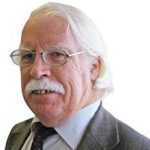
 Peter Costello
I held the pen and God did the Writing,
by John Tado
(Cocoon Press, €10.00 / £ 8.99)
The author of this little volume of poems, his second, is a Cork man who began late in life writing what he sees as the poems of a “Catholic poet”. Very much a local man, the poems too are very local, and in that sense universal, for it is in the local that we often find the most human expression.
The publisher, based in Brosna in Kerry, is also very local; but as Brosna is the birthplace of Denis Guiney of Clerys fame, we can see that the local has a way of turning national, if not international.
John Tado (a pen name) was inspired to begin writing poems late in life by a reading of English poet Sally Read’s great anthology 100 Catholic Poems (Word of Fire Press, €26.99 / £26.99), in which she claims:
“Poetry is the language of Catholicism. From the songs of Scripture to the hymns of St Thomas Aquinas, the Church has always used metaphor and image, meter and rhyme, and the music of language to illuminate and inculcate the faith.
“Yet, when it comes to Catholic poetry itself, the song too often remains unsung. Many devout believers recoil from poetry, even when it is deeply Catholic.
“Many poetry lovers overlook Catholic poetry, even when it is truly great. And passionate readers are left with few resources from which to draw inspiration–even as the number of great Catholic poems continues to grow…”
This is self-evidently true. But it is a demonstration that poetry is not just for the trained and academic; it is for everyone. John Tado has found in his maturity a way of giving expression to what he has experienced. From a not untroubled life he has taken a new direction.
He says that the poets he admires are Walt Whitman, Carl Sandburg and (in contrast) John Cooper Clarke: these are all artists with a distinctive personal voice. It is this aspect that moved John Tado, and led to the writing of these forty-two poems.
The personal voice is there, so is the experience, but he is still working towards those moments, not only of verbal achievement, but universal expression that he found among great Catholic poets. But he is on his way. We will hear more of him in years to come. He is a passionate reader changing into a reflective writer.
I suspect there are many more like him out there: as the American child said of the springtime flowers (now all around us) he gathered for his mother, “all the woods are full of them!” And that in itself is an encouraging thought.
Catholics are used to the idea of an “examination of conscience” – that searching of one personal life for failings. But poetry, by contrast, is an exploration of one’s consciousness, the discovery not of faults, but finer, truer, more spiritual things in one’s own “deep heart’s core”.