

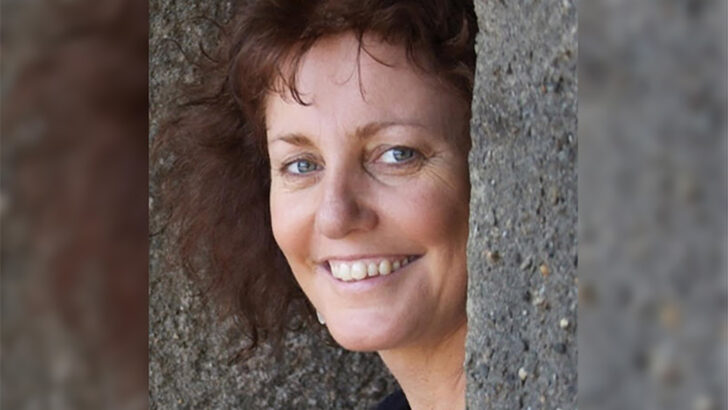
 Poet Enda Wyley
Sudden Light,
by Enda Wyley
(Dedalus Press, €12.50 pb / €20 hb)
Enda Wyley, recipient of the prestigious Lawrence O’Shaughnessy 2026 Poetry Prize in the US, has been described as a true poet whose poems are perpetually fresh, utterly scrutinised, marked by vigour and virtuosity, arriving on the page as accomplished things.

Her new book, Sudden Light, is just that, a powerful outpouring of grief, memory, love and joy showering blessings on us all.
Memory
In an unforgettable sequence of poems about her late mother, in layers of personal and shared history, she discovers that the poet’s role is to remember, that with loss comes the grace of memory. And in remembering the likes of the late Michael Hartnett and Mary Lavin she proclaims that no one is ever gone whose life is said.
The act of writing is a perpetual discovery she reminds us, where the poet listens and watches. Bearing in mind Auden’s “poetry makes nothing happen”, she can state with confidence that the poem makes something happen beyond explanation and nothing is lost that cannot be retrieved.
Many of her poems take their inspiration from a wide range of photographs and paintings, among them a magnificent homage to King Henry, Henry Shefflin, the great Kilkenny hurler, whose portrait by Gerry Davis hangs proudly in the National Gallery of Ireland.
Love can find a new path into life, that love survives lightly and with such delicacy it surprises you, that exhaustion is defeated by joy”
Unlike the photographer or artist, she has no camera or brush to catch life, just her pen “to scribble it down” as she writes here. And what a treasure she bestows on us – that love can find a new path into life, that love survives lightly and with such delicacy it surprises you, that exhaustion is defeated
by joy.
Discovery
A poet with a profound sense of the spiritual, even the religious, in poems like “Annunciation” and “Lamentation at the Foot of the Cross” based on paintings by Luca Signorelli (1441-1523), she goes the distance, enters the mystery, carrying the reader with her along the way.
In a collection that both uplifts and nourishes, she discovers, as much for us as for herself, that we live in semi-darkness and suddenly there’s light. A remarkable achievement.