

 David Quinn
 Each summer, newspapers like to suggest books people can read during your holiday time, so I am going to come up with a suggestion that you might think is daunting at first, and that is to pick up and read something by Leo Tolstoy
 Each summer, newspapers like to suggest books people can read during your holiday time, so I am going to come up with a suggestion that you might think is daunting at first, and that is to pick up and read something by Leo Tolstoy, rated by many as possibly the greatest writer of all time.

I’ve have always devoted most of my reading time to non-fiction. Apparently, most men are the same.
But two works of fiction have towered over me for years and I have always thought, ‘I must get around to reading those one day’. The two works are War and Peace and Anna Karenina by Tolstoy.
What deterred me? One is the sheer size of the books. Anna Karenina runs to around 900 pages and War and Peace to over 1,200 pages.
The other factor was an assumption that they would be dense and hard to read. On this second point, I can now assure you that this is not the case. Tolstoy’s prose is majestic. It flows and carries you along. It even lifts you up as all good novels should. You are carried off to different places and different situations and you feel as though you are there.
It could be a ball, when he captures the excitement of a young girl attending her first dance. Or it could be a battlefield where you can almost hear the cannon shot, the bullets, the shouting and screaming of the men. Apparently almost no-one better captures what is like to be in the thick of a battle than Tolstoy, and that is because as a young man, he fought in battles, so he had first-hand experience.
He puts you into the heads of his characters with particular skill. Tolstoy is regarded as a master psychologist. You end up understanding some of his characters better than you understand yourself.
Story
One of Tolstoy’s biographers, A.N. Wilson, said of the experience of reading War and Peace: “no book seems more real…For everyone who has enjoyed the experience of being completely lost in the world of ‘War and Peace’…putting down the novel and returning to the everyday concerns of ‘real life’…is turning to something paler, less true than Tolstoy’s art itself.”
Wilson says: “In the Second World War, it was a common experience that those who read ‘War and Peace’ were, for that week or fortnight, more interested in the campaigns of Napoleon or Kutuzov than in those of Hitler versus the Allies”.
In the Russian version, Anna is to some extent the architect of her own destruction, and her husband is a decent man”
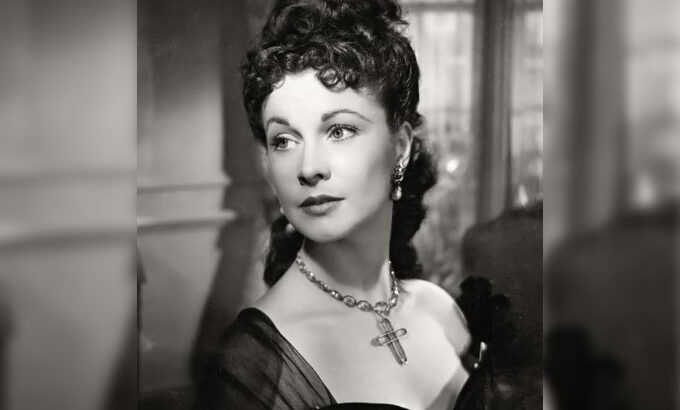
If you haven’t read the book, then there is a good chance you have seen a movie or TV adaptation of War and Peace or Anna Karenina. What finally prompted me to read Anna Karenina was a TV version of the book made in Russia. But the character of Anna in this was very different from the version played by Keira Knightley in a movie version of the story.
In the Knightley version, Anna is a victim driven to destruction by society and those around her. Her husband, Alexis, is portrayed as a horrible man.
But in the Russian version, Anna is to some extent the architect of her own destruction, and her husband is a decent man. His main problem is that he bores her, she is far better looking than him, and they are badly matched.
I wanted to find out which version of Anna (and her husband) was closer to the book, and the answer is the Russian TV version.
Anna Karenina is, of course, famous for its opening line: “All happy families resemble one another, each unhappy family is unhappy in its own way.”
Tolstoy
Tolstoy was born in 1828. He was a nobleman and spent most of his life on the family estate a little over a hundred miles south of Moscow. As mentioned, he spent some of his youth in the army and fought in the Crimean War.
He married Sofia, and between them they had 13 children, of which ten survived childhood. They had a mainly unhappy marriage although the early years seem to have been the exception. She acted as his secretary for a time and when he was writing War and Peace in the 1860s, she wrote: “I spend my whole time copying out Lyova’s [Leo’s] novel. This is a great delight to me. As I copy, I live through a whole world of new ideas and impressions. Nothing has such an effect on me as his ideas and his genius”.
Tolstoy understands human nature the way Albert Einstein understands physics”
Count Tolstoy lived until 1910 and died age 82, a grand old age for those days. He and Mahatma Gandhi used to exchange letters. (Gandhi at this stage was still a young man). Tolstoy had become a pacifist and wrote extensively on the idea. This had a profound influence on Gandhi, and later on Martin Luther King.
After War and Peace and Anna Karenina were published in the West, Tolstoy became world famous, and he began to leave aside writing stories in favour more political and religious works. (He was a Christian in his own way but was excommunicated towards the end of his life by the Russian Orthodox Church).
He became a great moral leader. Twice towards the end of Tolstoy’s life, Michael Davitt went to visit him in Russia to win his support for the Irish cause. Imagine how long and arduous that journey was back then.
For me, Tolstoy’s writings prove that human nature is permanent. Even though his stories are set in a very different country at a very different time, all his characters will be instantly recognisable because people don’t really change, and Tolstoy understands human nature the way Albert Einstein understands physics. This is why he is a such a good teacher. When you read one of his books, afterwards you feel you understand life better, and I think the older you get, the more you will appreciate this. I don’t think I’d have understood his books properly if I read them when I was in my twenties.
Review
I read Anna Karenina and War and Peace a bit at a time, at maybe 10 or 20 pages a day. This made them less daunting. When you finish them, you feel a sense of achievement. I didn’t want War and Peace to end. I wanted Tolstoy to continue telling the stories of its main characters. (By the way, don’t feel obliged to read the second epilogue to the book, which is basically an essay on history. The first epilogue, on the other hand, is the best description of family life I’ve ever come across).
But you will be glad to hear that Tolstoy also read lots of short stories, so maybe start with one of those collections. Then you will find whether or not you like his writing style. But if you do, and you then decide to read his major works, well, I envy you, because a voyage of discovery awaits you.
Tolstoy’s writings prove that human nature is permanent. Even though his stories are set in a very different country at a very different time, all his characters will be instantly recognisable because people don’t really change”