 Domestic Violence, Child Custody, Family Law, Courthouse, Lawyer
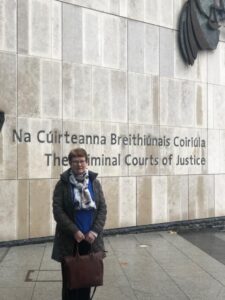
 How Sr Fiona Pryle has spent decades battling for women’s safety
The numbers are stark. Gardai were called to more than 65,000 incidents of domestic abuse last year, a 45% rise in just four years. But the numbers don’t tell the whole story, behind those figures are lives marked by fear, isolation, and tragedy. For Sr Fiona Pryle RSG, who has spent more than two decades walking alongside women in abusive relationships, the statistics are not abstract but the lived reality of countless families.

“This is a seriously, seriously growing crisis,” she told The Irish Catholic. “Society is becoming more violent. The whole piece about social media, the whole piece about pornography—I feel that we are living in a very, very troubled, violent society. And sadly, the home is not immune.”
Origins
Born in rural Meath, Sr Pryle joined the Good Shepherd Sisters at twenty, drawn by their mission to serve people on the margins. In the 1980s she worked with homeless boys in Dublin, witnessing not only their vulnerability but also the harsh attitudes some carried toward women and even their mothers. Later, she turned her attention to women in prostitution, helping to establish projects that offered alternatives to exploitation.
Since 2001 she has focused on domestic violence, working with the Ascend service in Tipperary. It was there she began campaigning for systemic reform – on refuge spaces, legal protections, and, most importantly, child maintenance. Again and again, she saw how women who escaped abuse found themselves trapped in poverty, dependent on a system that too often failed to enforce court-ordered payments.
“I have seen a big correlation between women in domestic abuse and poverty,” she said. “You are a victim of abuse and then you end up living in poverty as a result of it.”
Sr Pryle has many such stories which illustrate how hard it remains for women to leave abusive situations. Housing shortages mean refuge spaces are scarce, and nine counties still lack any dedicated shelter. Even where services exist, they are often full, forcing women and children to travel miles from their communities.
“If I had my choice, it would be the men who should leave the house,” she admitted. “But in Ireland, because of property law, it is almost always the woman and children who must go. And then you have the housing crisis keeping them in danger.”
The legal system, she argues, adds a further layer of complexity. “The legal journey is dreadful for most women,” she explained. “Securing barring orders is very hard. Breaches often go unpunished. And when it comes to child maintenance, there is little accountability.”
She recalled one case of a woman whose partner, despite earning a high salary, refused to pay the court-ordered maintenance for their four children. By the time they were grown, he owed €124,000—money the woman never saw. “If I hadn’t been involved, that family would have been starving,” Sr Pryle said.
Changes
In recent years, changes have been made, albeit slowly. Under then-Justice Minister Helen McEntee, the government published a comprehensive review of child maintenance enforcement in 2024, with recommendations including freezing assets of non-paying parents. Minister McEntee also delivered a long-sought reform in 2023 – the right to five days of paid leave for victims of domestic violence.
But for Sr Pryle, implementation is everything. “If there is no accountability, if nothing makes fathers pay, then women remain trapped in poverty. We must have legislation that is fit for purpose.”
She has also been watching the Department of Justice’s work on parental alienation closely. While she supports children’s right to know both parents, she fears the term is being misused against women seeking safety for their children. “We put children’s voices into the Constitution in 2013,” she said, “but I have not seen that respected in practice.”
As a religious sister, Sr Pryle does not shy away from critiquing the Church. In the past, she explained that priests sometimes gave character references for abusive men. “I once had a priest phone me and say I was splitting up a good family,” she recalled. “I told him: you have no training in this, no right to say that.”
She believes parishes could do more, even symbolically. Each year, she has urged that the Church’s prayers of intercession during the international “16 Days of Action” against violence should include victims of domestic abuse. “If we don’t even pray for it, how can we claim to be aware of the crisis?”
For Sr Fiona, prevention begins long before crisis points. She believes Ireland’s education system has failed to instil the basics of respect and consent focusing instead on SPHE. “We’re teaching children about sexuality and gender identity, but we haven’t even got the basics right. We haven’t taught them respect,” she said.
That gap, she argues, feeds directly into the rising tide of abuse. “If we don’t tackle gender equality in our society and teach basic respect for the human person, we’re just going to have this continuously.”
We’re teaching children about sexuality and gender identity, but we haven’t even got the basics right. We haven’t taught them respect.”
Serve
At 80, Sr Fiona continues to serve on state working groups, lending her voice to debates that may outlast her. She admits the process can feel like “beating the drum endlessly” against inertia, but she remains undeterred. “While I have a voice, and while I am cognitively okay, I will continue to speak,” she said.
Her legacy is visible in the slow but steady reforms now taking root: paid leave, promised enforcement of maintenance, and a growing recognition that domestic abuse is not just private tragedy but public crisis.
“Ireland still has a long way to go,” she said. “But the more awareness we raise, the better. Because for too many women and children, home remains the most dangerous place of all.”