

 The magesterial
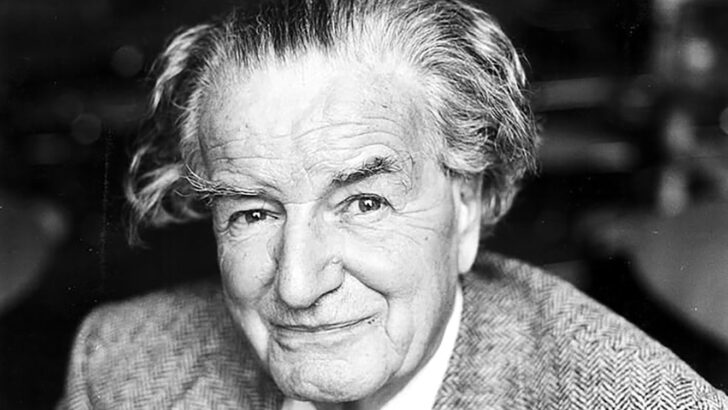
Christopher Hill
The magesterial
Christopher Hill Christopher Hill: The life of a radical historian,
by Michael Braddick
(London: Verso Press, £35.00 / €42.95)
Though I occasionally met Christopher Hill (1912 -2002), he was, as the author of this thoughtful study attests, as reserved within his kindly and courteous public demeanour as to have left me with little sense of his actual personality.

Instead, my lasting impressions of the great Marxist historian derives from two encounters with his work which, though separate in time and character, are strongly reinforced by Michael Braddick’s fine and deeply researched biography.
The first was my undergraduate reading of Hill’s marvellous, The Century of Revolution, 1603 – 1714 (1961; paperback, 1969). Though a contribution to a series on the history of England, this was not a textbook, nor even one of those conventional single authored surveys of a period, in which a strong political narrative dominates, with a smaller number of chapters on economy, society, and culture tacked on, fore and aft.
It was boldly innovative in structure. Divided chronologically into four parts, each part was in turn divided into four analytical chapters, providing in depth discussions, dealing with political conflicts, economic developments, and the evolution of religious and secular thought and argument.
For students fed on the stodgy diet of intricate political narratives, Hill’s book was an exhilarating experience, supplying in a compact but lucid form, a sense of the deep and rich textures of historical movements – as well as a great deal of fascinating, original information.
Expression
That this was far more than a pedagogical innovation is revealed in Braddick’s careful study. It was an expression of a view of history distinctive to Hill from the beginning. This was his rejection of economic determinism, allied to his promotion of a more humane version of the historical dialectic, well encapsulated in Hill’s succinct paraphrase of Marx: “Man is not merely a social animal, but an animal that can develop into an individual only in society and Puritanism in Pre-Revolutionary England (1964).
This was a Marxism that echoed both the young Marx and Gramsci. But Braddick is right, I think, in suggesting that this perception antedated Hill’s reading in these sources, and lay in his adaptation of the ethics of his non-conformist upbringing to the realities of a material world. It was a powerful confection.
Even at the time of his greatest influence, however, reservations were expressed that there was something rather too neat in both Hill’s interpretative formulations, and in his use of the evidence which he adduced to support them.
It was with the publication of Hill’s (1964) and The World Turned Upside Down: Radical ideas during the English Revolution (1972) that the cogency of such doubts became more persuasive.
Criticism of Hill’s selective ‘source-mining’, that is his selected quotation from selected sources; and his slotting of such evidence into pre-existing interpretative frameworks, all became common responses, especially after the devastating critique of the American J. H. Hexter.
Some indeed favoured a form of ‘Home Rule’, and even the toleration of Catholicism. But their humane and progressive impulses were crushed by the Cromwellian authoritarians”
It was in this context that my second direct engagement with Hill’s work occurred in the form of a paper on “Seventeenth century English radicals and Ireland”, which he delivered to the Irish Conference of Historians in 1983. Hitherto, Ireland had featured only fleetingly in Hill’s work; and this was the first time he gave sustained attention to the topic.
In it Hill argued that not all of the radical republicans of the 1640s and 50s shared the intolerant and merciless attitudes of Cromwell and his soldiers toward Ireland. Some indeed favoured a form of “Home Rule”, and even the toleration of Catholicism. But their humane and progressive impulses were crushed by the Cromwellian authoritarians.
Such an argument was widely pleasing to an audience of different ideological shades. But on its publication enthusiasm waned. The evidence for the case, it turned out, was really very thin.
Indeed much of it was derived from the allegations advanced in an intense polemic against the radicals entitled Walwyn’s Wiles (1649), which included among several instances of the radicals’ lunacy, the slander that they were soft on the Irish. It was all a bit like invoking Joe McCarthy’s declamations to demonstrate the organisational strength and breadth of the American Communist Party.
Research
Subsequent research has suggested that Hill was not entirely wrong: that on occasions, and for complex reasons, a few radical Englishmen quietly dissented from the Cromwellian line. But his argument was greatly overstated, and the evidence on which it rested quite inadequate.
This impression is confirmed by Braddick, but in a carefully measured fashion. Measured, because, while he fully acknowledges the flaws in Hill’s methodology, and the damage it has done to his historical interpretations, he also acknowledges the deeper values underlying Hill’s work.
For Hill, Braddick argues persuasively, was at heart a moralist who believed that an attentive reading of past history would make us better persons in the present. “All knowledge of the past”, wrote Hill, “should help to humanise us”. For all his faults, Hill was on the side of the good.
Modestly (and quite unnecessarily), Braddick concedes that his study is more an intellectual biography than a full dress life. It is very good both in elucidating Hill’s own historical research and the assumptions underpinning his writing.
But it is also good in supplying clear and balanced accounts of several issues and events in British cultural and political history, from the dilemmas of the Left in face of the challenges of the 1930s and the Cold War, the cultural upheavals of the 1960s, and the Thatcherite threat to the independence of historical thinking.
Occasionally, and only where the evidence allows, Braddick offers some discussion of Hill’s private and domestic life. But this is a wholly appropriate approach to a man passionately convinced that individuals were formed only through engagement with the social and political forces of their time.
Ciaran Brady is a former professor of History at Trinity College, Dublin