

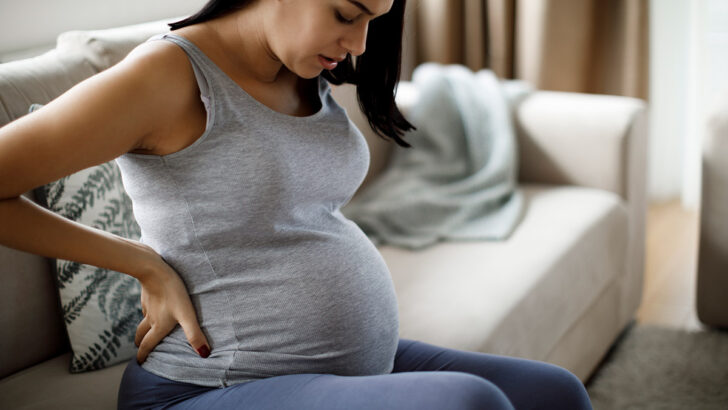
 Photo: iStock.
 Nearly eight years ago now, I honeymooned in Mexico for a couple of weeks. One of my abiding memories is sitting in a small-town square enjoying a local festival, watching the world go by, and being amazed by the sheer volume of children that were hanging out of prams, running around, screaming, shouting and laughing. The streets were alive with the sound of children, to paraphrase Julie Andrews (or rightly, Oscar Hammerstein II, who wrote it).

I honestly do not know where they all came from. In 2018, Mexico had a birth rate (or more accurately, a Total Fertility Rate ‘TFR’) right at replacement level of 2.1 – but notably, there was a very stark urban-rural divide – with the rural birth rate at 2.5 and urban closer to 1.5. Today, the Mexican birth rate is well below replacement level at 1.6 – only 8 years later. Fewer women are having children and those that do are having fewer.
But that figure of 2.5 points towards my amazement in that quiet country town. In Ireland in 2018, our TFR had already plummeted to 1.75 in 2018 and has dropped to somewhere between 1.47 and 1.55 in 2025.
Ireland is not the worst. Today, about two-thirds of the global population live in countries or territories where the TFR is below replacement level of 2.1 children. Most industrialised countries are far below replacement levels, with nations like South Korea sitting at record lows around 0.8. But Ireland is trending in only one direction. And unless you are an eco-zealot, it is the wrong direction.
Direction
A new paper from the Iona Institute, a conservative Think Tank in Ireland headed by well-known commentator David Quinn, projects that one in four members of ‘Gen Z’ look set never to have children – increasing to almost 25% from current levels of 15%.
My own ‘research’ comparing Ireland to Mexico in 2018 told me something was amiss. Only a fool can not see what is happening with their own two eyes as public spaces are emptying of children. Not all is due to declining birthrates of course. Thinking back to my own childhood in the 1980s, we were always outside, we played together in packs. Four or five families of five or six children each could be found roaming the fields or the streets of small towns. Just like rural Mexico in 2018. Today, the children that are being born are more likely to be at a screen than a swing.
Some posit that the Iona predictions are conservative and the figure is likely to be higher”
The Iona Institute’s paper is called ‘Choice or Circumstance? Rising Childlessness in Ireland’ and it is stating the obvious. It is also highlighting an important issue and attempting to analyse a problem that, given its near existential nature, is ignored far too much. Unlike D-Ream, things cannot only get better. It looks like they are going to get worse.
The paper uses the Brass Relational Model (or Brass Logit System) as a demographic modelling method used to estimate incomplete demographic data into the future. The projections are by no means certain because the model relies on early-stage data and existing trends – which are no guarantees of the future. But the ever-increasing levels of childlessness in early life (20s and 30s), growing generation by generation, point towards increasing childlessness for life.
Some posit that the Iona predictions are conservative and the figure is likely to be higher. Yet could be lower if something changes. We are not captive to the data. That is the challenge with modelling. If something changes – then the real outcome changes.
Social
The problem is – and the Iona paper only surmises – that no one has really identified the cause. Short-term issues such as the price of housing and late-blooming are often cited but the trend correlating with prosperity, individualism, comfort, insularity, choice is not explored nearly enough.
My own life is merely an anecdote and the plural of anecdote is not data. I did not get off the fence, grow up and make lifetime commitments until close to my forties. Why? Because others weren’t doing it. I had disposable income. I enjoyed life. I didn’t know what I was missing out on. Selfishness is addictive. By 2018, it was almost too late for me and my wife.
Iona asks whether it is “Choice or circumstance?” but these are not mutually exclusive. They come together. The choice is to procrastinate and the circumstance manifests from lack of purposefulness, because of ill-thought through choices (or lack of) and a society that prioritises affirming individual choice and superficial happiness as the most important thing.
Social policy makes no effort to educate or explain the value, the joys, the benefits and the no-regrets of parenthood. Yup, it is hard. Yup, you have to make sacrifices. Yup to so many downsides. But they pale into irrelevance. And until it is experienced, nothing can really explain what it means to be a father or a mother. It is a public policy interest to promote family-life but there is silence. Family, kids, are something to be avoided at almost all costs. God forbid an unplanned pregnancy.
The vicious circle of fewer children begetting a society that not only devalues them but rejects them outright in the public square begets fewer children again”
Mary Wakefield, writing in the Spectator only last week, writes that “having and raising an actual child involves the total disruption to a carefully balanced and curated life”, and I think this is the real problem. As society ‘advances’, the allure of that curated life is all too enticing and too hard to give up. Marx wrote of a socialist utopia where “I can hunt in the morning, fish in the afternoon, rear cattle in the evening, criticise after dinner.” It may not be hunting, fishing and rearing cattle, but it is working, socialising, Instagramming and being a troll or a virtue-signaller on X or wherever that is predominating.
And while the Iona report goes to some lengths to explain that while they refer to ‘women’ throughout it is not just about motherhood. Left out of the analysis is the ever-extending adolescence of men who decline to grow up.
The consequences outlined in the report are important for society – who will pay for all the old people and who will care for them – but the vicious circle of fewer children begetting a society that not only devalues them but rejects them outright in the public square begets fewer children again.
Children
Wakefield wrote of the “rise of the child-haters”, where childlessness is a cause and self-perpetuating consequence as “in its shadow, an entire industry of child-free activities has also begun to flourish. There are child-free restaurants, child-free gardens, child-free hotels, all advertising themselves with the same indefinably unpleasant air.”
Raising a child is hard. It can be lonely. They can and will break your heart. But they are a source of indescribable joy that can only be known in having them, risking the heartbreak and letting go of the certainty sought in a carefully curated life-plan. It takes a leap of faith. Just like faith does. It can’t be explained and it can only be experienced by taking the plunge. There is nothing better than your two-year-old spontaneously saying ‘Daddy, I love you’ for the first time.
Deeper research and understanding is needed. Sociology and anthropology can often be useless and misleading endeavours, but the human reality of declining birth rates is one area where the careful approaches that genuinely good researchers have learned in these areas might prove useful. If David Attenborough could have directed his efforts at his fellow humans, we might not be looking at population cliff-edge.