

 Senator Ronan Mullen
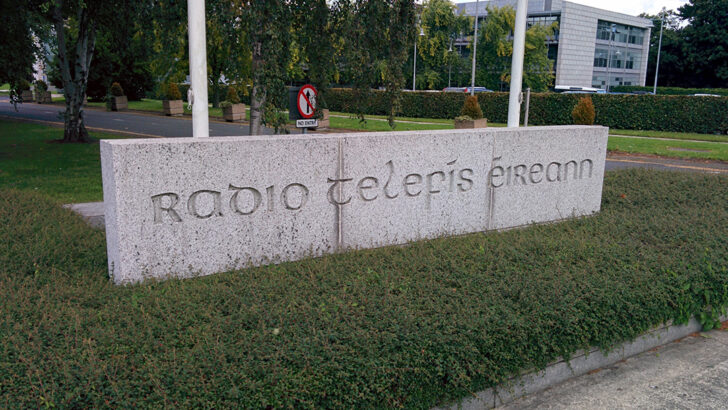 RTÉ in Donnybrook. Photo: Flickr /James Cridland.
 I owe Alistair McConnell a phone call. A few weeks ago, he got in touch with me by email. He wanted to hear my concerns about RTÉ’s broadcast output.

Alistair is the Head of Editorial Standards and Compliance at RTÉ. He emailed me after his Director General, Kevin Bakhurst, appeared some days previously before the Joint Oireachtas Media Committee.
At that meeting, I asked Mr Bakhurst about RTÉ’s failure to reflect the diversity of opinions and viewpoints across Irish society on a range of issues, particularly social questions.
On a previous occasion, when I asked Kevin if RTÉ would audit the views of its personnel to see if they had sufficient diversity within their ranks, he replied that my proposal sounded a bit ‘North Korean’. That was rather ironic. Because in North Korea, if I understand that tragic country properly, they test not for diversity but for uniformity.
Second time around, Kevin was more amenable to considering the problem. While not committing to an audit, he did confirm that he was “interested in diversity” and that he would consider the matter. Well, he might, considering he first arrived in RTÉ following the Fr Kevin Reynolds libelling, which in no small way could be put down to anti-clerical prejudice.
Concerns
In the meantime, I must get back to Alistair. I am a bit mystified about why he wants to hear my “concerns” though. I thought we were beyond that. The question is whether RTÉ is concerned yet. The station has not yet recovered from the scandal caused by excessive remuneration of its ‘top talent’, the hidden nature of some of the payments, and its culture of largesse generally even as it was hurtling towards a financial bail-out by the State. It has a job to restore trust both among its own disgruntled employees and among those licence-fee payers who believe that RTÉ holds their worldview and values in contempt. There are many who see the public service broadcaster as, in fact, a State broadcaster that privileges the attitudes and values of a dominant cultural and political élite and de-amplifies the more local, rural and traditional.
RTÉ consistently framed the abortion issue over decades in terms that sought to secure legal abortion in the State”
When I meet Alistair, I want to hear how RTÉ will go about testing for the problem that I and others have raised – not just concerning its news and current affairs, but across its programming. Will there be an independent expert or experts to go about this in an open-minded way, and not an institutionally-defensive response? Will they seek testimonies from within the organisation about bias and activism? Eilís Mulroy described eloquently in last week’s Irish Catholic how RTÉ consistently framed the abortion issue over decades in terms that sought to secure legal abortion in the State. And we can say now that the station’s coverage since the 2018 referendum has sought to entrench it.
There are other issues where RTÉ fails to cater for all the children of the nation. A senior BBC editor, Rob Burley, has revealed how, over 13 years as a senior editor, he saw BBC’s commitment to impartiality undermined by transgender ideology and obsession with diversity and inclusion schemes, and how this led to a culture of intolerance and bullying. How would RTÉ measure up in an audit on this question?
To get diversity in your coverage, to get to the point where there are no second-class citizens and where critical, varied thinking is fostered, you need different and differing worldviews among your personnel, and among the organisations and committees that you normally consult.
Consider Pope Leo’s remarkable visit to Spain last week, a major cultural and international event by any standards. RTÉ did the basics, of course, bringing the news angles each day. But was there anything to stop them from covering the event nightly, with translations, of some of the highlights of each day of that visit? The spectacle itself might have drawn big audiences, surely a measure of how to fulfil a public service remit.
Right now, the world needs hope, and Pope Leo is arguably the only world figure offering it. Does RTÉ have enough people of religious faith within its ranks to bring proposals like this to the table, even if only for discussion? Or is there, as many of us sense, a sort of groupthink, an environment where a staff member might be embarrassed to say they’d been to church or where that might be smiled on as a personal foible that proves everyone else’s tolerance?
Mischaracterised
Concerns like this could easily be mischaracterised as an attempt to assert Catholic control over a broadcaster that claims to pride itself on its independence. In a recent podcast, Diarmuid Ferriter highlighted that one of the late Archbishop McQuaid’s lay proxies complained that of the 16 producers working in the newly-appointed Telefís Éireann, only two were practising Catholics. In fairness, at that time, such a ratio would not have been remotely representative of attitudes in Ireland.
But if Dr McQuaid might be faulted for seeking too much control, can RTÉ be faulted now for being too exclusive of religious viewpoints? How independent can you actually be if your structures reveal a disconnect between you and sections of the public that you serve? It’s not a matter of giving a few minutes here and there to a Catholic worldview – it is whether RTÉ is acting like an old closed-minded board set in their progressive views, intolerant of hearing those who might present disagreement persuasively.
It is time for RTÉ to stop telling us with taxpayer-funded advertising about all the value we are getting for our TV licence but to ask, “Are we serving you, all of you, well enough?”
Path
There is no path to perfection here. And, of course, it is not people’s personal beliefs or lifestyle that matter. It’s whether people are out to impose a worldview or are not testing their own assumptions enough as they go about their work.
Four years ago this week a controversy blew up about three episodes of RTÉ’s Liveline that discussed transgender issues, gender identity, and proposed changes to legislation involving maternity-related language. Then the guillotine seems to have been produced. I don’t think I am wrong in saying that there has been no public contestation of trans ideology on RTÉ since that day. ‘Go figure!’, as they say.