

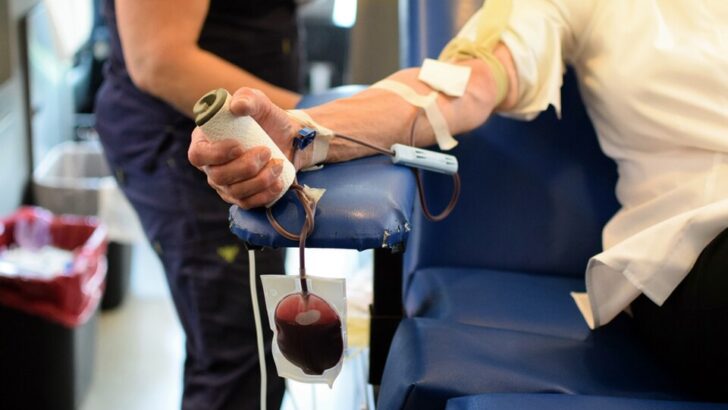
 Photo: Wikimedia Vegasjon
 A question asking, “is your current gender different from that assigned to you at birth?” on forms for blood donors could risk turning potential donors away because they fundamentally disagree with the question, said Michael Aherne on the Grásta Podcast with Bishop Phonsie Cullinan.

In a July 25 episode of the podcast, presented by the Diocese of Waterford and Lismore, hosts Bishop Phonsie Cullinan and Benjamin Quinlan discussed the deepening of gender ideology in everyday medical practice with guest Mr Aherne.
Mr Aherne, who said he is a lifelong blood donor, explained that he refused to answer the question because it would give credibility to an idea he fundamentally disagrees with: that one can change their gender. Co-host Mr Quinlan added, “There’s a lot of assumptions about reality baked into the question.”
“Why would they ask that from a medical point of view?” queried Bishop Cullinan. Mr Aherne agreed, explaining, “all the questions here are medical but this one isn’t.”
The Irish Blood Transfusion Service (IBTS) outlines in their leaflet on Transgender and Non-Binary Donors that donors are entitled to self-identify their gender as per the Gender Recognition Act 2015, but that there are a number of considerations, such as haemoglobin range, blood volume, and history of pregnancy, that “may impact their eligibility to donate”.
In a Departmental Inquiry in September 2025 Deputy Peadar Toibin asked the Minister for Health Jennifer Carroll MacNeill if she was aware of the amount of donors refusing to answer the question and therefore not being allowed to donate. In her response, Minister MacNeill pointed to the IBTS’ reasoning, positing that “it is essential for the safety of transgender donors and the safety of the blood supply that these donors are identified prior to donation” and that the only way to do so is to ask “a direct question of all participants.”
Proposing an alternative to the question that might lead fewer potential donors to be turned away, Bishop Cullinan said asking whether the subject has taken gender-altering drugs is more legitimate and appropriate in the medical setting.