

 Mary Kenny
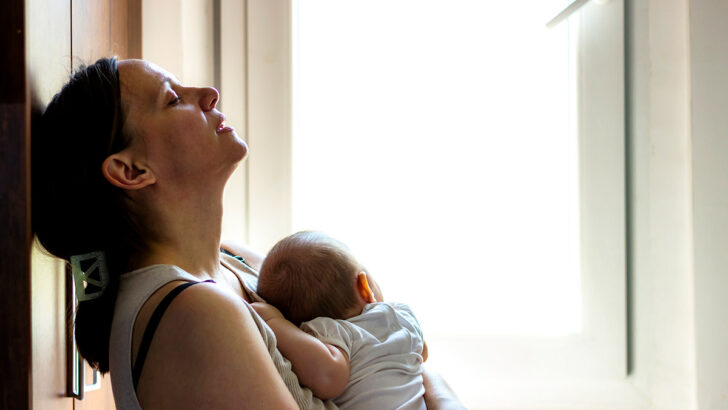 Photo: iStock.
 Maybe, in the face of all the negativity about the cost of – and reluctance about – starting a family, shouldn’t we honestly confront the facts of parenthood, and especially motherhood?
There are many reasons why younger people say they are not having children – and as a recent Iona paper on rising childlessness pointed out, a quarter of Generation Z (aged 14 to 29) will never become parents.
Lament
Careers, housing costs, and choosing to follow a lifestyle incompatible with parenthood are among the reasons often given. There is also a rising ‘anti-natalist’ movement flourishing on social media which condemns having babies on ecological grounds – that it uses up the planet’s resources.
There are even anti-natalists who say that as a child cannot consent to being born, giving birth itself is a selfish act. Praise is accorded to Raphael Samuel, an Indian businessman who last year tried to sue his parents for bringing him into the world without his permission.
He argued that, as life involves suffering, he deserved compensation from his parents for bearing him.
The anti-natalist debate highlights one of the truths about parenthood: it does involve sacrifice”
This is clearly dotty, and also brings to mind King Lear’s lament: “How sharper than a serpent’s tooth it is to have a thankless child.”
But the anti-natalist debate highlights one of the truths about parenthood: it does involve sacrifice. It may involve suffering. It undoubtedly diminishes the chances of a carefree lifestyle.
When my elder son was born, I remember a friend saying: “From this day forward, until you go down into the grave, you will worry about the person you’ve brought into the world.” So true.
My late sister, who didn’t have any children (more by chance than by choice), said that she didn’t think she could have coped with the anxiety of being responsible for a child.
Small wonder that our mothers prayed so much. Or that they identified with Mary, Mother of God, whose soul a sword would pierce.
And then, on top of the anxieties, comes the guilt – of not having been a good enough parent. How many memoirs are written about the failings of mothers and fathers?
Meaning
So that is the honest side of the story: admit that being a mother is hard. And yet, it is also truthful to say that it can be the most rewarding role ever undertaken. The sacrifices and suffering are what deepen the experience, and make it meaningful.
Carefully planned parenthood surely puts more of an onus on the parent to get everything right”
I sometimes wonder if motherhood might have been less intense when families were bigger. When there are only one or two children, a high standard is expected from such “quality control”. If there are eight or ten, is there more acceptance of the rough-and-tumble aspects of life, the element of chance, the lottery of genes? Carefully planned parenthood surely puts more of an onus on the parent to get everything right.
In our world of costs and benefits, choices and consent, maybe we need to elevate the virtues of courage and fortitude. Yes, parenthood is tough: but so is life itself.
**
I read complaints that good manners are in decline, and the admirable Alice Leahy, who has done so much to support homeless and troubled people in Dublin, also holds this opinion. “Bad manners have now become widespread in all walks of life,” she has written. “This clearly points to no respect for the other person.”
It does seem to be the case that folks are so glued to their smartphones that sometimes they don’t notice others around them. Yet I find that people can be very helpful – sometimes even overly helpful.
At Mass recently, a lady who noticed that I use a stick for my arthritic knees approached me and said: “Would you like me to arrange for the priest to bring you Communion, so you don’t have to go up to the altar?” No, I said, I’m fine. “Are you sure?” she insisted. “Thanks – I’m fine – leave me alone!” I snapped.
Well, I was the one showing deplorably bad manners, and I immediately regretted my crabbiness. But being helpful is a fine balance between offering support and allowing the helpee some independence. Alice Leahy would know where to draw that delicate line.
**
Nice to see the Scotland football team, and their kilt-costumed followers, bring bagpipes and fife onto the streets of Boston.
Scotland has needed cheering up this long time: it holds the record for the highest number of drug-related deaths in Europe, despite a recent decline. And general deaths have exceeded Scottish births since 2014.
This gloomy profile has been accompanied by a steep decline in religious practice – the 2024 Census showed Scotland was more secular than England or Wales, with over 51% now practising no religion. The Church of Scotland lost a million members in this first quarter-century.
Scotland needs more optimism, and optimism needs faith. Success in sport can help prompt both.