

 Mary Kenny
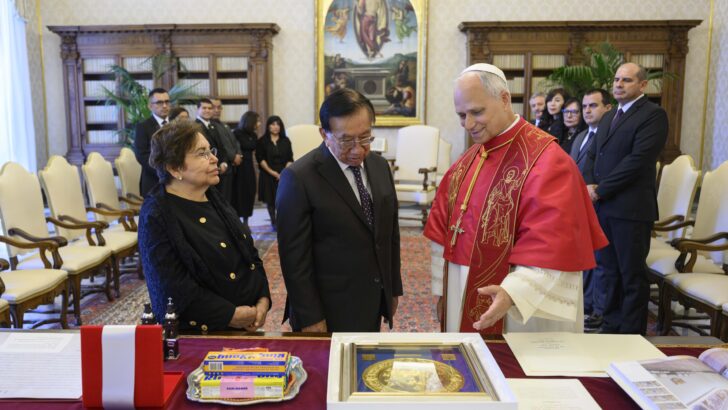 Pope Leo XIV and Peruvian President José María Balcázar exchange gifts June 18, 2026, at the Vatican. They met for a nearly two-hour discussion, after which the president revealed details of a possible papal trip to Peru in November. (OSV News photo/Simone Risoluti, Vatican Media)
 Pope Leo is one of the most popular and well-respected public figures in the world today, and his humanity and holiness have earned him that popularity.
When the President of Peru announced that Leo will be visiting in November, there were wonderful pictures of the Holy Father previously travelling by mule in that country. It seemed such a humble form of transport.
Sexuality
And the statement Leo made over the weekend about Catholic moral focus will have been applauded by many. He said that the Catholic Church’s teaching ethics should be less prioritised over “greater, more important issues.”
“We tend to think that when the Church is talking about morality, that the only issue of morality is sexual,” he was quoted as saying. “And in reality, I believe there are much greater, more important issues, such as justice, equality, freedom of men and women, freedom of religion, that would all take priority before that particular issue.”
I am sure that many people will agree that often, in the past, there has been too much stress on sexuality, and not enough on what Leo terms “greater issues”. Justice, equality and freedom of religion are important moral subjects.
Everything from wretched marriages to violence and rape, from paedophile abuse to coercive abortion can be linked to sexual morality”
But here’s where I enter a quibble. How much power and control does each of us have over the big questions of justice and equality? And how much power and control do we have over our own behaviour?
The ordinary Joe Citizen may deplore appalling cases of injustice and cruelty, be they in Afghanistan, America, Israel or Iran, and may even become an activist in such causes. But he still has much more agency over how he chooses to behave in his own intimate life.
The consequences of sexual choices and behaviour are not trivial. Everything from wretched marriages to violence and rape, from paedophile abuse to coercive abortion can be linked to sexual morality.
Morality
Only last week, in Britain, a terrible case came to light in which a baby’s brutal death was caused by sexual abuse. That surely comes within the framework of morality.
Yes, trivial misdemeanours were sometimes over-emphasised, and harsh judgements were passed on people who fell out of line. But a correction should be proportionate, if I may say so.
We should reflect on major questions of objective morality. But we still exercise more choice and control over how we behave in our private lives.
===
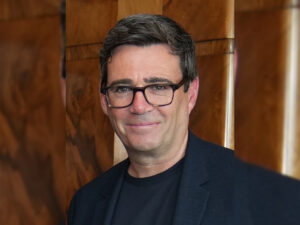
As a baptised and confirmed Catholic (although apparently not religiously practising) Andy Burnham will not be allowed to nominate Church of England bishops, as British PMs have done. I daresay it won’t bother him much.
There’s often been a questionable political element to this custom (Margaret Thatcher nominated low-church George Carey for Canterbury, seeing him as Tory-friendly.)
Irish Catholics find it strange that an Established Church, as in Britain, is so intertwined with the Constitution – yet it’s Ireland, where no cleric may hold any office of state, which has been described as a “theocracy”.
Still, there’s value in Anglican bishops legislating in the House of Lords. During debates on issues like Assisted Dying, they do at least bring a thoughtful moral and spiritual dimension.
===
A loss of diversity of communication
I’m sorry when any publication shuts down, and the closure of the satirical magazine The Phoenix is a loss to the national discourse.
Reflecting the values of its long-term editor, Paddy Prendiville, it was left-wing and republican – it dubbed entirely respectable Fine Gael party members as fascist “Blueshirts”. My pal Kevin Myers was repeatedly targeted for his politically incorrect views.
But satire and mockery are part of journalistic tradition – from Jonathan Swift to G.K. Chesterton – and a healthy democracy needs irreverence. The Phoenix did some sharp political reporting, and published readable material on the arts and the turf. There was also gossip, or “personality journalism”, as the media euphemism calls it – another long tradition.
The mag, founded by the late John Mulcahy, had replaced a previous publication, Hibernia, in 1983. This had been a fortnightly with a strong emphasis on cultural as well as political matters. That too had been a loss. Diversity of communication is vital to freedom.
===
In this broiling hot weather, there’s an ongoing debate about the ethics of air conditioning. Environmentalists say that it is bad for the planet – it uses up so much energy and the refrigerants involved draw on harmful synthetic gases.
It’s an American invention – a US printer, Willis Carrier, developed the procedure for his printing presses in 1902 – and it has had a significant impact on hot climates. Places like Singapore and Dubai could never have flourished without it. It’s a boon to Africa, where extreme heat can be intolerable.
Personally, I resort to my collection of paper fans – an effective form of natural air-con. I even once had a pretty one of Lourdes, with an image of the grotto across its folds.