

The deepest structure of reality is not domination or fear, but self-giving love, writes Alan Martin
God created mankind in his own image. This does not mean that humans physically resemble God, but rather that humans uniquely reflect something of God’s ultimate nature and character. Specifically, God is rational and loving and humans can reflect this through moral awareness and rationality expressed through the virtues of love and humility. This is absolutely true of every person, regardless of whether they are Christian or indeed of any specific religious persuasion. We are all greatly loved by God and the call is to one of reconciliation with Him. Christ through his obedience to his Father’s will perfectly reveals what humanity was meant to be. However, regrettably, pride and ego have to a large extent overtaken this call and this is reflected in the current state of upheaval across the world.

Therefore, now more than ever, the Church must profess the true nature of the Kingdom of God, which is ultimately one of love. This is most clearly reflected in the Gospel of Matthew, when Christ was asked about the greatest commandment, and answered by stating “Love the Lord your God with all your heart and with all your soul and with all your mind”, “Love you neighbour as yourself”, and “All the Law and the Prophets hang on these two commandments”.
Pronouncement
What a pronouncement – all the of the law hangs on these two commandments. These commandments then to Love God and your Neighbour are clearly quite fundamental to our salvation? Indeed, and this is important in a world of rapidly changing demographics, as we must consider who our neighbour truly is. Is it people of the same Catholic faith, the same race and the same creed? Absolutely not, as Christ sets out for us in the parable of the Good Samaritan, where he essentially explains what this commandment means in practice.
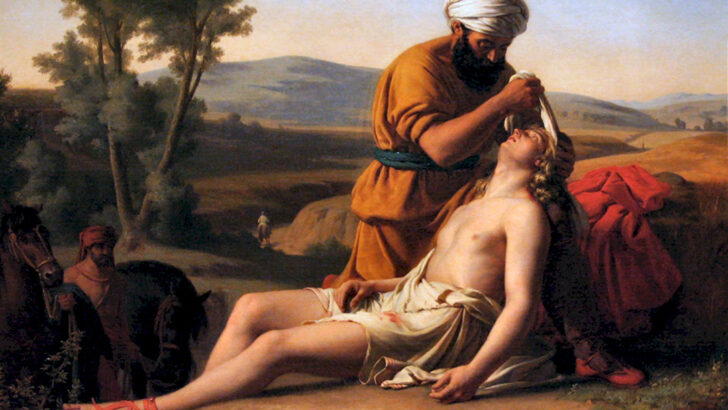
The well-known story portrays a Jewish man (who were considered God’s chosen people), who is robbed, beaten and left half dead on the road. A priest passes by and sees the man but does nothing. Similarly, a Levite (religious assistant) also sees the man but ignores him. However, a Samaritan (a people whom the Jews viewed with deep hostility and who were seen as deeply ungodly and outside the law of Moses) stops, helps the man, bandages him, carries him to safety and pays for his subsequent care. Who then is our neighbour is the question that Christ poses? Is it he self-righteous religious, who is supposedly justified by his faith to the law of Moses? No – it is the one who showed mercy! Therefore, the love of God is proven by mercy towards people, regardless of race and religion. The priest and the Levite may have been outwardly religious, but the Samaritan actually embodied God’s ultimate compassion for humanity.
Symbolic
One could also view this wonderful parable as highly symbolic of the current state of the world. The wounded man represents humanity: broken, vulnerable and spiritually wounded. The Samaritan becomes an image of Christ: the outsider who shows mercy, the one who rescues the helpless and the healer of the lost soul. Indeed, Christ came to spread the Kingdom of God beyond the Jewish people and ultimately to the pagans and the Gentiles.
Therefore, true Christianity is a concrete picture of divine love operating through a human being. All religious are called to this as their ultimate mission. It is a revelation of what a God filled life looks life, and it will spread Gods kingdom quicker than anything else. Indeed, how a society treats vulnerable people truly reveals its spiritual condition and the recent tensions between Pope Leo and Donald Trump have emphasised that the dignity of all people is paramount to our faith and any so called Christian politics rooted in fear, marginalisation, exclusion or domination have no place in Christ’s Kingdom, for as he says himself, “I was a stranger and you welcomed me and whatever you did for one of the least of these brothers and sisters of mine, you did for me”.
Finally, the resurrection of Christ most fully reveals the true nature of God’s loving nature, who defeated the violent, empirical and deathly crucifixion, through forgiveness and inexhaustible mercy by raising Christ from the dead. Therefore, it ought to be absolutely clear to everyone that the deepest structure of reality is not domination or fear, but one of self-giving love.
Alan Martin is a Dublin based solicitor.