

 Peter Costello
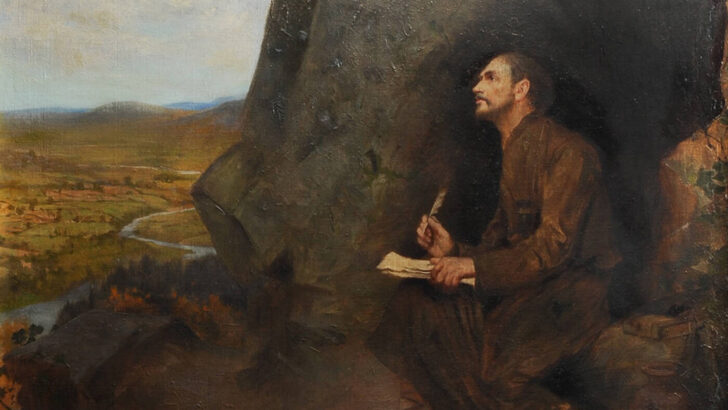 St Ignatius and the daily habit of prayerful examination.
 Brendan McManus will be known to readers for his writings on the Camino and for the trilogy of books that make up the Mess series of books, dealing with the spiritual state of the world today. These have all been widely read. But here is a very different book. It appeals to stillness and to interior thought in a special way.

The Examen derives ultimately from the Spiritual Exercises of St Ignatius: “It will be very useful every day to review the whole day in order to detect how God has been present, where one has been drawn closer to him, and where one has resisted or neglected his grace.”
In this little booklet, McManus has achieved a long-time ambition to provide a manual which will concentrate one on the state of one’s soul. It is a freshly minted translation of the Examen, the end-of-day prayer composed by St Ignatius for members of the Jesuit order to make at the close of each and every day. It may be a small book, but it is one filled with the spiritual insights of the founder of the order.
These stages are in turn connecting oneself with God, moving one’s mind to a sense of gratitude to God for his gifts of life and grace”
McManus commences by first explaining the origin and purpose of the Examen. Then he provides an outline of the five stages by which the prayer is carried forward.
These stages are in turn connecting oneself with God, moving one’s mind to a sense of gratitude to God for his gifts of life and grace. Then follows a review of the day chronologically, a sorting of the day into light and dark, and finally the essential matter of looking forward to the next day.
Procedure
This sounds all very simple, but there is an important aspect to the procedure. All Catholics are used to the idea of “an examination of conscience” – all too often in the past, this was seen as searching out the “sins” of not only the day but one’s past life.
However, Brendan McManus suggests that really what should now be involved is an “examination of consciousness” – that the failures of the past should not be forgotten, but that the whole of our mind and spirit should be the object of examination, to find the essential benefits, blessings even, of the day. Rather than a negative dwelling failure, we should move our minds into the way of creating a better future.
This is the sort of book which can be commended, but whose real value cannot be truly expressed until it is put into practise on a daily basis by the person themselves. Each one is different, and there cannot be “a same size fits all” solution to our daily problems. Ignatius suggests we can find our own way through dealing individually with our own daily experiences. The dailiness of it is important, as each day in which the path is made straighter, becomes a way forward for the next day, and the days to come.
Over the last decades, the Sacred Space initiative of the Irish Jesuits has helped many people in many different ways. This little book is an important adjunct to the other publications of that programme.