

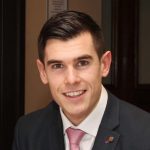
 Cathal Barry
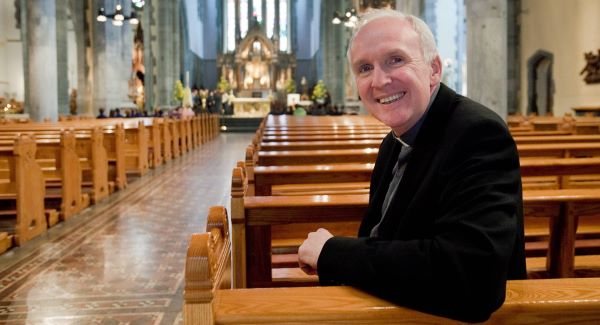 Bishop Brendan Leahy
 The success of the synod in Limerick was that it listened to people, writes Cathal Barry
The decision to convoke a diocesan synod back in September 2014 was a bold move by Limerick’s Bishop Brendan Leahy who at the time was little over a year in office.
After all, until last weekend there had not been a synod in Ireland in over half a century, and none in Limerick for 70 years.
Having come from Dublin it was an opportunity for Bishop Leahy to get a feel for his flock. More importantly still it was a clear indication that this was a bishop willing to listen and take heed of what his faithful were telling him.
Fast forward 18 months and Bishop Leahy now describes the synod as an “incredible journey” that began because he “wanted to hear from the people exactly what they are concerned about and what we can do in the future to improve our Church and how it serves the people”.
“The great thing about it is that it has been a people-led journey. The people decided what would be on the agenda and the people voted,” Dr Leahy said.
“We now have a new beginning and go from this with the challenge of implementing almost 100 proposals, probably hundreds of initiatives in total, to make sure our Church serves as it should in the future.
“Arising from this, we have a lot of change to implement and it won’t happen overnight. But we will get there,” he insisted.
Over 100 proposals to create a more unified, inclusive and accessible Church in the Diocese of Limerick were voted on at the three-day synod held at Mary Immaculate College over the weekend.
Themes
Some 97 of the 100 proposals were approved across six themes covering a wide range of issues, from dealing with hurt in the Church to enhancing its faith formation, hospitality and welcome.
The 100 proposals were decided on by 400 delegates, impressively over 300 of them were lay people.
In addition to presiding over the proposals for positive change to the Church, a range of ‘universal issues’ beyond the jurisdiction of the diocese were also discussed.
The synod’s director, Fr Eamonn Fitzgibbon, described the process as an opportunity to “look again at our Church life and renew it”.
“We completely opened up, asked 5,000 people what was wrong, what was right, how the Church can best serve in the future and we will now implement change on the basis of what they have said. This has been a really unifying and inclusive process and we now have a lot to do but look forward to doing this together,” he said.
While it is now up to the bishop and his diocesan team to develop a guiding document for the future of the diocese taking account of the way in which delegates voted, a number of key issues clearly emerged that cannot be ignored.
These issues included faith formation, lay leadership and lay ecclesial ministries with equal roles for women, support for priests, vocations promotion and child safeguarding.
Delegate and Faith Coordinator for Limerick diocese, Lorraine Buckley, said she felt “energised” by the process.
“Personally I am, of course, really pleased with the recognition that women have been given in this synod. It sends a real message of freshness and an appetite for change coming through in the Church here.
“Professionally, I am delighted also with the interest in faith formation. That’s really encouraging as people want to work at their faith and want support in that,” she said.
While any number of headlines could be plucked out of the three-day assembly the real success of this synod was the process itself. People felt listened to at last and the diocese now owes it to them to convert talk into action.
Synod, after all, means to journey and this one is only really beginning.
What the delegates said…
“We want to make sure that something positive comes out of the synod. The whole atmosphere leading up to this, even during all our meetings up to now, has been electric. It has been unbelievable among young and old and everybody has a common goal to make the Church more about the people again.”
Maura Hayes, St Patrick’s.
“We would like the see the laity and in particular women more involved in the Church. If you look at the people going to Mass on a Sunday, the majority of them are women, so I think they should have more of a say in decision making.”
Seamus Moloney, Kilmallock
“I have found this experience to do tremendously uplifting. I has left me feeling very positive about the future. The discussions and topic that have come out of this process have covered all aspects and all section of modern life. I think the will is there to make the Church change for the better and I get the impression from being part of this synod that it will.”
Sean Carroll, Bruff
“I have found this to be a very exciting process. It is ages since I have seen such energy in the Church among such a large group of people. It’s very heartening and gives me great hope for the future.”
Mary Sadlier, Fedamore
“The synod has been very well organised and very well run. People’s opinions are sought and they are taken on board. I would hope that we eventually get a good guiding document from this process going forward and to create a sense of community within our diocese.”
Billy Quirke, Abbeyfeale
“I have loved the process so far. Everything that we heard in the listening process is actually being put to use and voted on now. It is great that we can see the votes being processed and it is interesting to see what people are going for and what people are going against. Change is needed now that we are in a Church that has become old. It needs regeneration.”
Nicola Brouder, Mahoonagh
“I think the whole synod has been very well orchestrated. The voting process is great and the fact that you can see it in real time and being able to see and listen to the reactions of the delegates is excellent. As a young person I am delighted to be part of the process because in years to come the things we are going to chance will be there for the next generation.”
Mariah Culloty, Monagea
“The synod has been very interesting. I love the voting system and how quick we get the results. You expect most of the results but a few have surprised me. I hope that this synod is not just all words and that it is actually put into action. The delegates who voted have to take responsibility after this and ensure things get done.”
Michael O’Brien, Lourdes pilgrimage group