

 Peter Costello
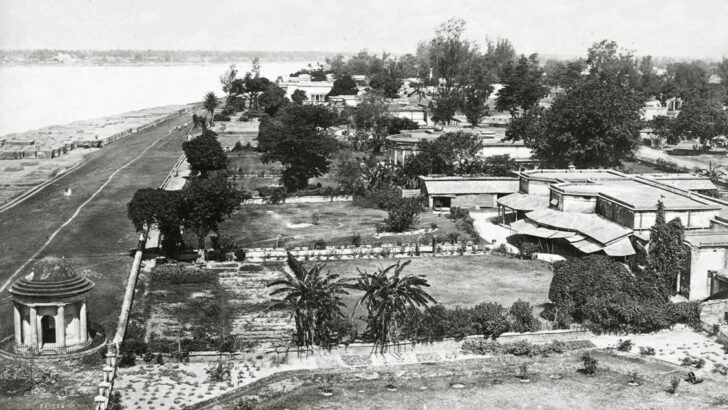 The first settlement of the East India Company in Bengal in the time of Robert St Leger’s visit.
 Robert St Leger SJ,
by Thomas J Morrissey SJ
(Messenger Publications, €12.95 / £11.50)
When one considers the huge number of Irish men who answered the call of a priestly vocation, over the last three centuries it is inevitable that most of them will now be either forgotten or little known.
The author of this book, a Jesuit administrator, historian and educator, puts it a little differently. “In tumultuous times, the gentle and the diplomatic are often lost to history.”
So though Robert St Leger will be familiar to those acquainted with aspects of, say, the history that lies behind Clongowes Wood College, the fame of institution has indeed eclipsed the man: earlier he had helped to establish Tullabeg as a college, but it was its incorporation into the Kildare school that transformed the latter into the important place it remains.
Crucial
Robert St Leger was born in 1788 and died in 1856, so he lived through crucial years in Ireland. Though in Ireland he saw the restoration of the Jesuit Order (a complicated affair in many ways), it was a country dominated by calls for an end to the penal laws, and beyond Catholic emancipation, for an Irish right to self-determination, an even more interesting aspect of his life were the years spent abroad in the wider world.
Given the beleaguered state of so many Christians in the Republic of India today, these pages will be read with great interest by many in this country”
This was as a result of his dispatch to India, to the city then called Calcutta (the Kolkata of today), as a delegate of the Pope. This oriental adventure is perhaps the most unusual part of this book; some seven of the chapters are devoted to it.
Given the beleaguered state of so many Christians in the Republic of India today, these pages will be read with great interest by many in this country. But St Leger’s India was not the familiar India we know from Kipling or the days of the Mahatma.
We have to remember that at this date the British territorial possessions in India were run by the East India Company – they were in effect a private domain of City of London businessmen.
Though school books might praise the achievements of Clive at the Battle of Plassey in 1757, the Company was mired in scandal and controversy from the Trial of Warren Hastings to the Opium Wars, in which the drug produced in India was forced upon the unwelcoming Chinese by force of arms in the name of free trade.
The broad territory of St Leger’s Vicariate was 1080 miles long and 900 miles wide, reaching to within 120 miles of Madras (now Chennai in Tamil Nadu) on the west. On the east, it extends to the Burman empire (now Myanmar) to the east and north to Tibet.
Minority
This was a huge and quite unfamiliar region teeming with Hindus and Buddhists, in which Christians of any kind were a distinct minority. Their background was also confused, for due to other colonial adventures the Portuguese and French enclaves provided Catholic populations which did not care much for British activities – places that survived into more recent times until forcibly occupied by the Indian government.
St Leger’s difficulties then were not always with the British it seems so much with his own Catholic flock. The author passes quietly over the more political aspects of the India of the day. St Leger returned to Ireland, but the year after his death there broke out in 1857 the “Indian Mutiny” (what Indian historians of today call “the First War of Independence”). As a result, its powers were taken from the Company (leading to its later abolition) and the beginning, in blood and hatred, of the British Empire in India.
But one serious affair in which St Leger was involved were the very early discussions about the will of a French adventurer General Martin. This is presented here as giving an opportunity for the foundation of ecumenical schools for Christians.
Will
Martin had died in 1800 – but his will which also involved a school in his native Lyon – was not finally settled until 1840. What eventuated after St Leger left India was not what either General Martin had wanted, or St Leger had hoped for; the Martinière College at Lucknow in Uttar Pradesh, became an Anglican establishment, one which only admitted those of Indian race in 1937.
In these pages Fr Morrissey has achieved what he aimed at, to retrieve from the obscurity of late Georgian and early Victorian Ireland and India, a distinguished Jesuit of quiet but very real accomplishment in the many offices he was placed in, from apostolic delegate to spiritual councillor: he gives a very human portrait of a very remarkable man from a remarkable era.