

 Peter Costello
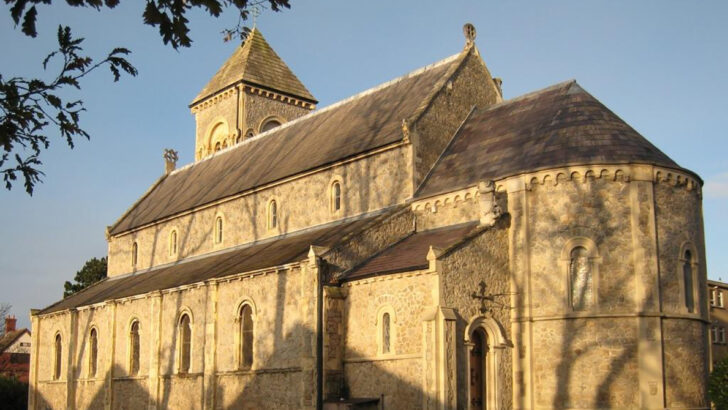 The church of St John the Evangelist, Sandymount.
 No Church is an Island: 175 Years of St John the Evangelist, Sandymount, Dublin, by Alyson Gavin Lysaght & Shabnam Vasisht (€20.00; to purchase contact the church office at sandynount@dublin.anglican.org)
This is a book which those who already have Dr Ian Milne’s history of St Bartholomew’s, Clyde Road, will like to have, as it fills out more of the history of the little enclave of Anglo-Catholics in South Dublin, which also included the two convents of nuns.
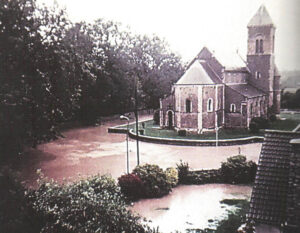
I think it can be said that the history of these establishments is not well known in general to those of other Christian traditions. The title of this book is echoed in a remarkable way by a photograph of the church isolated by flood waters one unfortunate year. But it survived that trial, and as the two-handed text makes clear, many others trials.
Trustee
The Church down in Sandymount was never a parish church, but a trustee church of the Pembroke Estate, a chaplaincy in effect. The text falls into two parts. The first part is an historical account by Alyson Gavin Lysaght, which draws on historical records of several kinds and the researches of some others. The second part by Shabnam Vasisht is a more personal one, and most effective for that reason. The book introduces a set of remarkable and determined chaplains who have led the community since 1850 and unfold a fascinating aspect of the religious history of Dublin which many will be interested to read for both its local and its national interest.
One reads of the long drawn out conflicts between the chaplains of the church and those opposed (often non residents of the area) to their ritualistic “Romish ways”. Those days are now well past, and a common unity in the face of the modern world has made the various churches in Sandymount a community of true friends.
Those seeking to understand the interior life of the Anglo-Catholic tradition might resort to Rose Macaulay’s Letters to a Friend (1961) and Last Letters to a Friend (1962)”
Over the years I had observed with sadness, while researching the histories of Dublin’s churches, that though St John’s followed the style of a charming Normandy church, the Caen stone used to build it had not weathered well in the harsh sea-seaside climate. But more recent restoration work – a continuing matter alas for all our churches – has taken care of that, and it has regained its old honey-coloured appeal.
(It strikes me in writing these words in connection with St John the Evangelist, that those seeking to understand the interior life of the Anglo-Catholic tradition might resort to Rose Macaulay’s Letters to a Friend (1961) and Last Letters to a Friend (1962), all written to her cousin Fr Hamilton Johnson, a member of the Society of St John the Evangelist, a monastic Anglican community, recounting with the renewal of her own Anglican faith after a relapse of many years during which she had a relationship with the Irish novelist Gerald O’Donovan, the author of Fr Ralph and other books during the later part of the Irish Literary revival. The letters do not relate to Ireland, but to the nature of Christianity and faith; Fr johnson’s letters to her were destroyed.)