

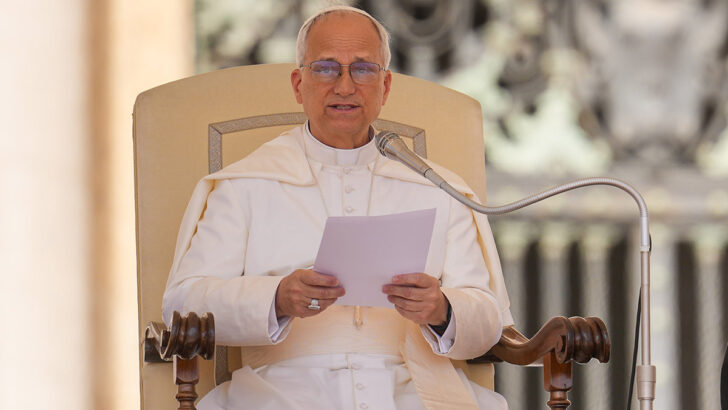
When Pope Leo XIV was still Fr Robert Prevost, he was assaulted on a Dublin street. “Never in my life, anywhere in the world have I been attacked as I was in Ireland” he said.

Fr Prevost’s only ‘crime’ was wearing a collar at a time when public fury over clerical abuse and cover-ups was at its height. That fury was justified. But too often that anger spilled over onto ordinary priests and religious who bore no guilt, only a collar. Many quietly stopped wearing it.
Imagine returning from the hospital after visiting the dying, having anointed someone in their last hours, and being jeered at as a ‘paedo’ in the street. This was the daily reality for many faithful priests and nuns — men and women who had devoted their lives to service. The sins of the guilty had become a curse on the innocent.
We are now watching something similar unfold in Irish politics. Threats, abuse, and intimidation are being hurled at elected representatives with increasing venom. Politicians are right to say enough is enough. Gardaí are investigating the most serious cases. In a democracy, there must be space for anger, protest, and sharp debate. But to attack a politician physically or to threaten their safety is not an attack on policy — it is an attack on democracy itself.
Priests and nuns know this well, caricatured on State run television as a faceless, corrupt institution, not as individuals. And unlike politicians, they had no State protection to fall back on. There were no Garda task forces to track the keyboard warriors or the street hecklers. They simply bore it in silence, as part of their vocation.
What makes Pope Leo’s story so striking is not only that he was attacked, but how he chose to respond. He did not present himself as a victim, nor did he seek revenge. Instead, he carried the memory as a lesson for bishops and pastors: that wearing the collar means carrying the weight of representation, and sometimes that means suffering as Christ suffered.
That lesson stretches beyond Church or politics. In Germany, Bishop Heiner Wilmer has warned against a rising tide of antisemitism. Just as it is wrong to spit on a priest because of scandals he had no part in, or to threaten a politician because of policies he did not make alone, it is wrong to hold Jews collectively responsible for a war they did not choose. Anger at injustice must never become hatred of the innocent.
Pope Leo’s quiet witness shows a better way. He did not lash back. He did not seek vengeance. He sought the lesson.
Christians don’t shy away
Pope Leo will presumably also have a sympathetic ear for the Irish bishops during their next visit to Rome for their ad limina when they outline why they are often reticent to pronounce on issues of the day in the political and social sphere and why there is so little Church/State dialogue in Ireland. And yet, when Peter met Christ on the road to Rome and he asked “Quo Vadis” the lesson was clear: Christians don’t shy away because the going is tough, they lean in. There’s been much said about flags here and in the UK. GK Chesterton gave the subject a lot of consideration when he came to Ireland for the Eucharistic Congress in 1932. Commenting on the Papal Flags in Dublin he said: “The great (Papal) flag began to flap and crackle in the freshening evening wind and those who had been toiling on the little farm, those whose fathers had been hunted like vermin, those whose religion should have been burnt out like witchcraft, came back slowly through the twilight; walking like lords on their own land.”