

 Martina Purdy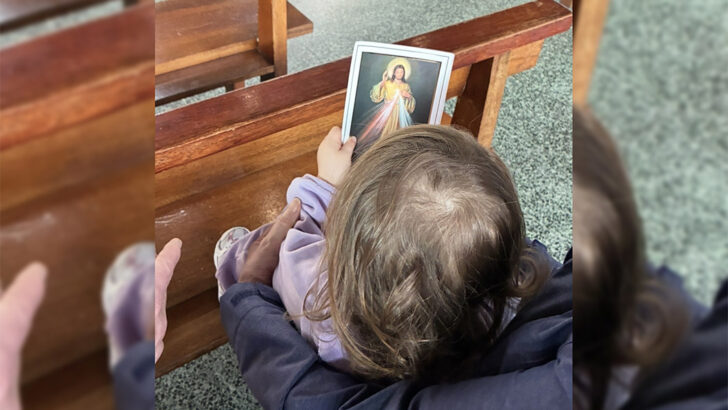
It was a decade ago that I first encountered a Muslim in Belfast, for many years, a city of Catholics and Protestants, and few dissenters. His name was Yousef, and he had come to Ireland to escape persecution. We met on the Falls Road – the west Belfast, where it is more common now to meet people of diverse faiths. Indeed, the most recent census indicated close to 100,000 Muslims now share our island.
So Pope Leo’s remarks on relations between Christians and Muslims – during an 11-day visit to African countries – hit home. “We can live together in peace,” he said, despite differences in beliefs, ways of worship and ways of living.
He delivered a similar message in December when he left Lebanon. “We perhaps should be a little less fearful and look for ways of promoting authentic dialogue and respect.”
Since then the US conflict with Iran has escalated – along with the reaction to this Christian call – and not just from Trump and his vice-president, already smarting over the Pope’s anti-war remarks on April 11.
While many lauded the Pope’s ‘apostolic courage’, critics complained of Papal ‘cowardice’, ‘wokeism’ – and worse: the Pope was giving cover to tyranny in Iran, failing Christian martyrs, ‘buying into the language of the left’, failing to face reality and ignoring Islamic fundamentalism.
Compatability
My thoughts turned to Yousef who had come from Pakistan. I’ve never met a gentler soul. When we met my convent was still open and I was wearing the brown habit of a Carmelite nun, living as an Adoration Sister. It was a French order, and I was increasingly aware of tensions in France between Muslims and Christians. Fr Jacques Hamel had been brutally murdered during Mass on July 26, 2016, by two men, pledging allegiance to the Islamic State of Iraq.
Yousef was curious about my convent, and he began to attend our adoration chapel. He wanted somewhere quiet to pray. I was aware that Muslims believed in Jesus as a powerful prophet and Yousef was quite familiar with Jesus. He said he had been schooled by missionary nuns as a child. He often asked for prayers so he could stay in Ireland. He would sit in the back corner of our chapel for hours in perfect silence and peace – sometimes putting the Catholics to shame by his reverence.
It is very important to learn to live together with respect for the dignity of every human person”
Faithfulness and devotion prayer is one of the many spiritual merits of Islam.
Pope Leo has reminded us that those who seek God are called to recognise the image of God in every man and woman made in God’s image and likeness. “It is very important to learn to live together with respect for the dignity of every human person.”
The Pope pointed to Lebanon to illustrate his point. “Christians and Muslims there rebuild each other’s villages after conflict and share daily life, despite past wars. We have to find ways to live with each other in peace and together take care of each other and our planet.”
In response, a well-known Catholic convert, Gavin Ashenden, once chaplain to the Queen, wrote in his blog ‘Anglican Ink’ that respect from Islam towards Christians is “not mutual.” “When the Pope presents Lebanon as a shining example of Christian-Muslim harmony, and suggests that the two faiths can easily become friends, he is speaking from an idealism that simply does not match reality.”
The example of Lebanon also drew a rather sarcastic remark from a Canadian author whose Jewish family fled Lebanon for Montreal when he was aged eleven. “Oh yes,” tweeted Gad Saad, “Lebanon is a wonderful exemplar of peaceful coexistence if you exclude the civil war from 1975-1990 that claimed the lives of 150,000+ people, and forced my family to flee.”
While Saad retains influential Christian and Muslim friends back home, he is concerned about Lebanon’s future stability.
In his new book, Suicidal Empathy, Saad claims that the West is ‘descending into madness’ with an excessive compassion for various minority groups. He argues that empathy – when not balanced or bounded by reason and accountability – can have unintended consequences, undermining a society’s core values and security. “Dying to be kind” is how he puts it, describing a world where emotions trump truth and sympathy for the criminal outweighs compassion for the victim.
And he has expressed this view about the consequences of Muslim immigration into the West. “Islamist groups don’t hide that they intend to conquer the West through three methods – the womb, immigration, and exploiting the West’s freedoms against it.”
Principles
I have no desire to be dominated by Islam, or live under Sharia Law but this may well be the consequence in some parts of what was once Christendom following the badly managed ‘open border’ policy of European elites whose honesty about the impact of their policies is seriously lacking.
One might well ask too if Church leaders in Muslim countries, fearful for their churches, are always truly honest when they speak publicly about Islam – and the experience of Christians there. Providentially, Bishop Robert Barron’s new book on modern Christian martyrs coincided with controversy over Pope Leo’s remarks, which are rooted in the Gospel. The ‘Word on Fire’ book is entitled: What Do Their Deaths Demand? And indeed what are we to do about the growing cloud of Christian witnesses who are pouring out their blood in martyrdom?
Muslims have met hostility here – and have their own reasons to fear well beyond the crimes of the Crusades”
In August 2024, Catholic army chaplain, Fr Paul Murphy, was stabbed seven times in Galway by a young Muslim, who had been radicalised. He forgave his teenage assailant and the youth apologised to him in court. This is the Gospel in action. “When you have the peace of God in your heart, everyone is beautiful,” the late Redemptorist priest, Fr Gerry Reynolds, a peacemaker in Belfast, once told me.
A Republican friend of mine goes out of his way to be brotherly to Muslims in Belfast, speaking a few words of Arabic now and then, mindful that Muslims have met hostility here – and have their own reasons to fear well beyond the crimes of the Crusades. “I have no problem with individual Muslims,” I once told him, “But I am weary of Islam or rather Islamism as a political force.”
He was most annoyed.
“You sound like Ian Paisley. He used to say he had no problem with individual Catholics, only Catholicism.”
His words challenged me – but in truth the late DUP firebrand did not consistently practice this principle.
Compassion
I do not believe the Pope is naive, or blind or suicidally empathetic. He is simply proclaiming the Gospel.
Whether we like it or not, Mosques being built in Ireland where ‘The Cross’ of Christ will increasingly be the ‘Crescent’ of Islam. It’s just the way we live now.
Life is easier when we are all on the same page, so to speak. Christians in our own country have a history of conflict, even slaughter. Our ties to Christ must hold fast as we are called to love both our enemy and our neighbour (or near one). If we do not see the image of God in one another, when conflict arises, there is grave danger we will revert to fear and tribal warfare. In Paris in 2018, I encountered a lovely Muslim doctor who was in my French class whose words stayed with me. “It is sometimes very hard to live with God,” said Rauda. “But it is impossible to live without him.”
And it is also impossible to be a Christian and not to love. How else can we hope to make disciples of all nations?
***
An adorable little girl was carried into morning Mass the other morning by her grandparents. She had a little plastic box containing three rosaries, a miraculous medal and a plethora of prayer cards to keep her amused. Among them, a beautiful image of Jesus – what a great idea!
***
A memorial Mass to mark the first anniversary of Pope Francis’ death was celebrated this week, on April 21, St Peter’s Cathedral, Belfast. Pope Francis’s motto was “miserando atque eligendo” – roughly translated as ‘having mercy’. While Pope Benedict was born at Easter, Pope Francis’ ended his earthly pilgrimage at Easter. His first anniversary fell on the Feast of St Anselm of Canterbury, who wrote: “Spare me through your mercy. Do not punish me through your justice.” How providential!