

 Eilis Mulroy
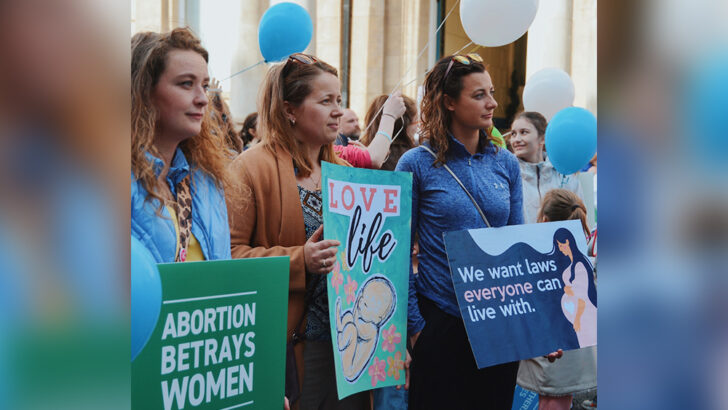 Photo: Eilís Mulroy
 Let 2026 be the year we reject the quiet excuses that hold us back – “it’s too difficult,” “someone else will do it,” “my effort won’t matter.” These thoughts do not move us forward; they keep us where we are. Real change begins when we refuse to accept inertia as inevitable and instead choose to act with purpose and conviction.
What looks small in isolation becomes impactful when united with others. Meaningful progress is not beyond reach; it is waiting on our willingness to take responsibility and act”
With regard to the pro-life issue, if each of us made a simple personal commitment – for example, to attend the annual March for Life in Dublin – and to dedicate even one hour each week to practical pro-life activity, the impact would be extraordinary. What looks small in isolation becomes impactful when united with others. Meaningful progress is not beyond reach; it is waiting on our willingness to take responsibility and act.
Each year, the March, which takes place on the Bank Holiday Monday at the start of May, stands as one of the most significant public demonstrations of conviction, compassion, and civic engagement in Ireland. It is a visible and vital public witness to the inherent value of every human life, in a culture that increasingly seeks to strip the unborn child of all meaningful and worthwhile protections.
In an age where many conversations take place online or behind closed doors, gathering in large numbers sends a clear message: this is not an abstract or marginal issue. It mobilises people across generations, backgrounds, and professions. Visibility plays a vital role in shaping public discourse, and the March ensures that perspectives centred on the protection of life remain part of the national conversation.
Since the introduction of the current abortion law, the annual number of abortions has risen from 2,879 in 2018 to 10,852 in the most recent recorded twelve-month period. The Government currently has no stated policy aimed at reducing these numbers.
In addition, Parliamentary Questions have revealed that over 100 babies have been born alive following what are described as “failed abortions” under the present legislation, with no indication that life-sustaining treatment was provided.
Coerced
We are also aware, through multiple court cases, that some women have been coerced into taking abortion pills by abusive partners. There are also grounds for serious concern that the conscience rights of young doctors who do not wish to participate in abortions are not being respected.
Taken together, these realities – along with other developments under Ireland’s current abortion regime – call for a clear public witness that points towards life-affirming alternatives. In essence, as pro-life citizens, it is our responsibility to actively work for the changes that are needed.
The annual March fosters a strong sense of community and solidarity. This family-friendly gathering offers encouragement, particularly for those who may feel isolated in their views. It reminds participants that they are part of something larger, strengthening their resolve and encouraging continued involvement long after the event has ended.
Another important aspect of the March is its educational value. Through speeches, signs, and conversations, participants are better equipped to engage thoughtfully and effectively in discussions within their own circles.
For many, attending the March is an act of civic responsibility – a way of engaging directly in the democratic process”
The March also plays a role in influencing policy and raising political awareness at a national level. Public demonstrations have historically been catalysts for change. By drawing attention from policymakers, the media, and the public, it helps shape legislative priorities and keeps the issue firmly on the political agenda. For many, attending the March is an act of civic responsibility – a way of engaging directly in the democratic process.
Furthermore, the event serves as an important platform for intergenerational engagement. Young people, in particular, are a visible presence. It offers opportunities for mentorship, encouragement, and example, helping inspire the next generation to take on responsibility.
Motivating
The March is also key in motivating continued action. For many, involvement does not end when the event concludes. Instead, it becomes a starting point – encouraging greater participation in local initiatives, volunteering, advocacy, and community support efforts.
It is understandable to question whether attending the March will make a difference. However, this overlooks a simple truth: public witness shapes public reality. The March is not only about presenting arguments; it is about presence. Every individual who attends strengthens its message and extends its reach.
Imagine the impact if thousands more supporters committed to attending the March each year and then to dedicating one hour each week to pro-life volunteering”
2026 can be different – but only if we challenge the inner voice that tells us change is too difficult or not our responsibility. History consistently shows that when ordinary people take steady steps, transformation follows.
Imagine the impact if thousands more supporters committed to attending the March each year and then to dedicating one hour each week to pro-life volunteering. Such discipline, multiplied across the country, would transform the pro-life movement in ways that seem out of reach today.
This year’s March for Life takes place on Bank Holiday Monday, May 4, beginning at 2pm on the Newman University Church side of St Stephen’s Green, before proceeding to outside the Dáil for speeches – delivering a clear message to the Government.
Do not simply consider attending. Make a deliberate and firm decision to take part this year. That is the kind of resolve required to move things forward and bring about lasting pro-life change. See you there!