

 Peter Costello
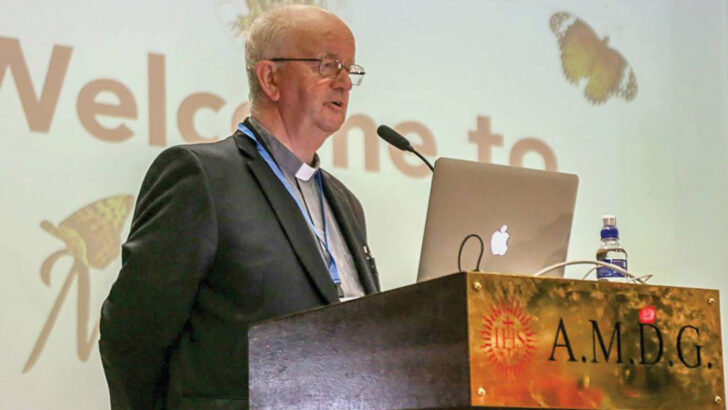 Fr Donal Neary spreading the word
 Generous Heart: A Daily Prayer Book,
by Donal Neary SJ
(Messenger Publications, €12.95 / £11.95)
Opening this book on its arrival on my desk, brought back to my mind the memory of my Jesuit mentors, seizing a quarter hour or so to pace about the corridors or grounds of Gonzaga College, to read their breviary.
The use of a breviary emerged from the practices of the early Christians: the apostles seem from what we are told in Acts seem to have had fixed hours of prayer. They established a set of prayers to be said at some seven canonical hours such as dawn, dusk and times in between linked to the hours of the Passion.
By extension this prayer book derives from this tradition. It has been arranged by the editor of the Messenger, the country’s most popular magazine by far. The Messenger has some 50,000 and more readers worldwide. The content of this book is culled to a certain extent from contributions to its pages.
Support
The animating notion of the book may be very ancient, but it is given a very up to date appearance in this presentation. The ancient scheme is simplified, a very necessary thing in these more complicated days.
It proposes prayers and reflections in four parts in the morning, during the day, and at night, concluding in an examen of the day taken from the Jesuit tradition.
What is the book trying to do? It is not certainly trying to make people be bound to strict canonical hours, an impossible thing in these days. It is not trying either to make people so intent on their “religious life” that they neglect their real life, the obligations and delight of the daily round in concert with others, old and young, believing and faithless.
Part of that listening, of course, is not only to what others have to say, but also what a more divine voice might be wanting to communicate”
It attempts to create a support, not a burden, in which the day can be infused almost without effort with a spiritual quality; to keep in mind that laborare est orare, even at the ubiquitous keyboard.
Now it is hard to pick out all the affecting details in a book of this kind. But on opening I was struck by a page or two from the reflections during the day; when you get the book they are pages 54 and 55, entitled simply “Listen”.
By chance my wife and I had been talking about this over dinner the night before. I lamented the rushed manner of modern Irish life in which people hardly listen to others at all. They are, as an eminent writer once put it, keeping their mind blank until you stop talking and they can have their say.
Here, however, Fr Neary rightly emphasises the need for personal silence so as to be able to listen and effectively comprehend others. This would really be getting out of one’s self. I had been complaining that people tiresomely break into the course of my telling a story, rushing to understand too soon, so that the story line was lost. Part of that listening, of course, is not only to what others have to say, but also what a more divine voice might be wanting to communicate.
Amalgamation
This is an excellent little book, which many will find not only practical but purposeful. It really has a reason to exist. So, while it may not demand the attention of the apostles, going regularly to pray in the Temple – the institution of the old order, not the new – it suggests something different: that Christian prayer is wherever Christians are, personal prayer is wherever you happen to find yourself.
The idea is not to separate a “prayer life” from “real life”, but to amalgamate them, making a prayer out of real life, “finding God among the pots and pans”, as St Thérèse said.
If I am not making this clear, don’t worry. Buy the book and Fr Neary will make it all clear from his own experiences of life and prayer. The generous heart of Jesus, he observes, accepts it all.