

 Photo: iStock.
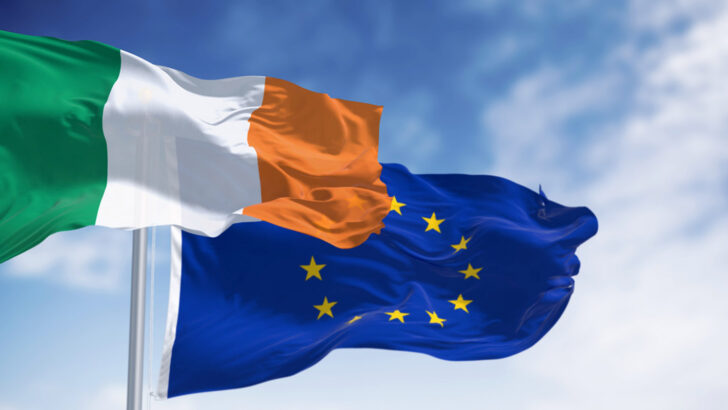
The recent political unrest in Poland is centred on control of its Constitutional Tribunal which ensures its laws are compatible with its Constitution. One of the backgrounds is Polish concern about EU encroachment on their national sovereignty, a concern shared by former Communist Bloc countries, who fear absorption into another supra-state. They also fear the breakdown in social cohesion in Western countries.
Across Europe there are growing questions about the way EU directives undermine a country’s freedom to order their internal affairs. Concerns occasionally surface in parliamentary debates but are more generally registered in a simmering discontent. “It’s too big to turn around and anyway isn’t it part of a densely packed flotilla and doesn’t Brexit show us what the alternative looks like?” sums up this thinking.
The political centre in Ireland has shifted leftwards towards ‘big government’ and the technocratic paradigm, what Micheal Martin calls “the values of the EU” which he pointedly contrasts with “backward ideas of sovereignty”. Quite an extraordinary remark for the leader of a party that branded itself Republican.
About a year ago Martin told a press gathering that there is nothing “unique” about being Irish. We are not and never were ‘homogenous’. Martin’s comments were made amid growing unease about the way our society is impacted by high levels of immigration.
Politics
His remarks were both correct and disingenuous. It’s true that we, like all nations, are far from homogeneous genetically. Martin went back to the Vikings and the Normans to make his case. He didn’t need to go back so far. 1916 leader, Patrick Pearse, was the son of an Irish mother and English father. Yet, Pearse espoused a uniquely Irish identity. His aspiration was to “make Ireland not free merely but Gaelic as well”. For Pearse, being Irish was less about DNA than shared aspirations and cultural touchstones. Two of Martin’s most illustrious predecessors as Taoisigh were Eamon de Valera, whose father was Spanish and Sean Lemass of Huguenot name and heritage.
By comparison, the party Martin leads today looks a lot more homogeneous, apart from all the 25th-generation Vikings and Normans. Why doesn’t the politics he represents attract more support from the new Irish? A sense of common identity and shared concerns, articulated in a shared language, is what matters, not genetic homogeneity. It’s what moulds disparate groups into a ‘we’ and an ‘us’, into a nation. Martin doesn’t think much of the nation-state either, “a new concept in historic terms”. He might have been reminded that the same can be said for democracy.
Our security, our prosperity and social progress can only be realised within an ever-closer union of neighbour states”
Immigration isn’t new and historically it has enriched host societies. However, as writer Douglas Murray pointed out recently, it can also destabilise host cultures if it proceeds too quickly and in too high numbers for the process of assimilation to keep up. All this is so very obvious yet so difficult to say without raising suspicions or even charges of racism.
If immigration isn’t managed, it threatens societal disintegration that can only be held off by an overarching superpower. Can an EU super state succeed, with soft force and ‘nanny state’ condescension, carrot and stick in hand? Is this what is already happening?
For Irish politicians, the political trade-offs are a no-brainer. Our security, our prosperity and social progress can only be realised within an ever-closer union of neighbour states.
High levels of immigration are a necessary part of our survival strategy. Our economy requires it because of our plummeting birth rates. We need workers to fund pensions and sustain advanced welfare systems. How rapidly changing demographics may alter political priorities is something that doesn’t seem to occur to politicians.
Arguments from exigency are compelling of course but where does this leave the things that matter most to people in their everyday lives? Macro-politics matter but people are just as concerned with the pressure on resources, particularly housing, and its impact on the lives of the rising generation. They are fearful that government is welcoming into their neighbourhoods people who don’t share the democratic values that underpin our political and social order.
Cohesion
People do care about international security but care even more about the safety of their streets. People aren’t indifferent to the need for economic co-operation with EU partners but are at least as concerned about the state’s failure to deliver affordable housing. People are concerned about climate but also about being able to afford to heat their homes. Everyone appreciates the efficiencies of cross border systems of administration but if the price is a sense of alienation from political decision making then it may seem a price too high.
What matters is its social cohesion and an appropriate degree of autonomy over its own affairs”
The loss of sovereignty is an undermining of the Catholic principle of subsidiarity which applies to communities as much as countries. According to that doctrine, “matters should be handled by the smallest, lowest, or least centralised competent authority rather than a higher or more distant one.” It doesn’t matter how diverse a country or community is in terms of colour, creed and backstory. What matters is its social cohesion and an appropriate degree of autonomy over its own affairs.
In a dangerous world we need strong alliances with neighbouring countries who share our values. Economic cooperation, free movement and common environmental and industrial standards have enormously benefited countries from Ireland to Poland. But people also value agency and are wary of elites whose purposes become more and more inscrutable as the legislative and administrative apparatus of centralised governance expands. The price of freedom is eternal vigilance. If we feel disempowered, it probably means we have been poor watchmen.
Alienation
The political class has alienated many of their lifelong supporters. Branding them as pawns of the ‘far-right’ for raising well-grounded concerns is even more alienating as well as self-fulfilling.
The art of politics is the art of the possible as ever, but surely it’s still within the realm of the possible for politicians to strike a better balance between technocratic or ‘eurocratic’ imperatives and the human needs of the people to whom they’re primarily accountable?