

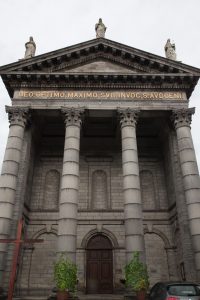
Dear Editor, Professor Patricia Casey often speaks wisely on many subjects. However, I have to challenge her on her views regarding the ghettoisation of ethnic minorities (IC 27/7/2016) with special mention of the Polish Community in St Audoen’s church.
When I first came to Ireland in 1963 there were about 50 Polish people in the whole of Ireland. We were all bilingual and well integrated and yet within a very short time we were having Masses for special occasions and later, monthly, in various venues according to availability of Polish priests; as the Polish community grew we had Masses in the Polish House until the house was bursting at the seams. We moved to Halston St Church and finally were given the use of St Audoen’s church by the diocese.
I know that Prof. Casey puts great value on family for our well-being and for most people our nation is part of our extended family. And for many Poles nation and faith go hand in hand. It is important to note that many people who go regularly to Mass at home stop doing so when they emigrate, as faith is part of their tradition. Mass in their own language helps to keep them faithful.
In Poland through the centuries every historical event, good or bad, has been celebrated with Mass. During communist rule it was the Church that stood with the people and when Solidarity was born, each day people were praying on their knees during Masses at the Gdansk Shipyard.
The hour or two per week spent in the Polish church will not prevent people from learning the English language and integrating. Indeed, Poles join others in public prayer, pilgrimages to Knock and Vigils for Life. However, for the few who never will learn English for various reasons, the Polish church is all the more important.
Yours etc.,
Dr Janina Lyons,
Clonsilla, Dublin 15.