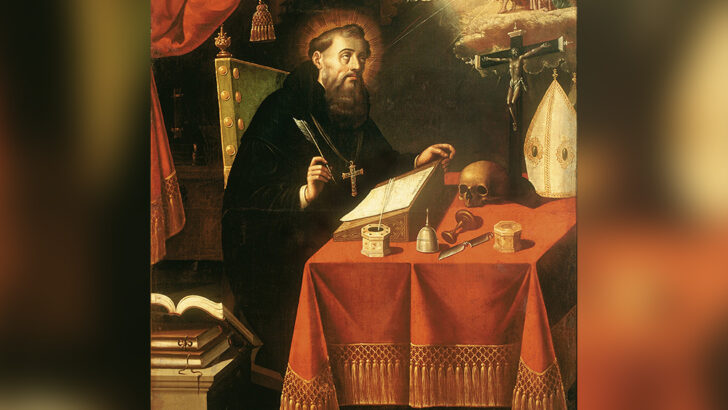
Book X is the longest book of Confessions and marks a dramatic transition from autobiography (Books I-IX) to philosophical analysis (Books X, XI, and XII). Here, Augustine also shifts the focus of his work to his present spiritual state as a newly appointed bishop of Hippo Regius (in modern-day Annaba, Algeria). Augustine’s search for God…
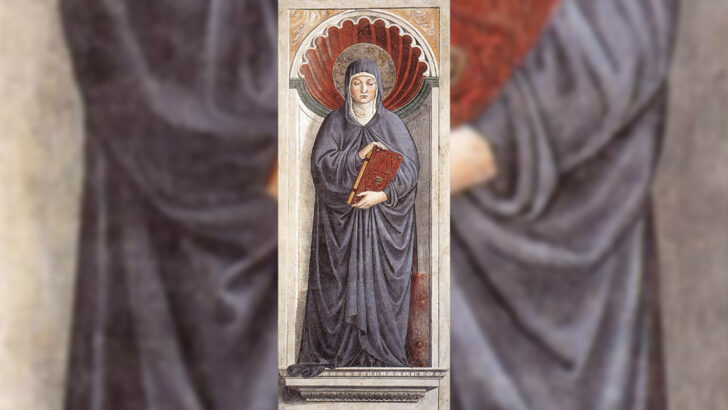
Augustine’s Confessions: Women as guides and teachers
In Book IX of Confessions, we encounter Augustine in a new place: a place of conversion, following his famous conversion scene which we examined last week at the end of Book VIII. From this new perspective, he notices his detachment from earthly things that previously weighed him down. God has removed his desire for fame…
Augustine’s Confessions – Conversion stories
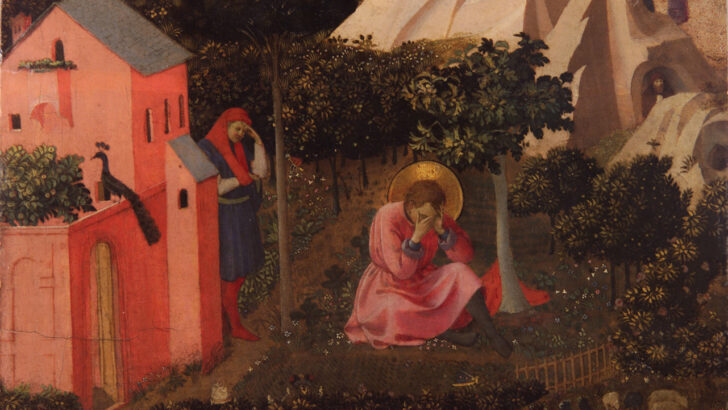
The eighth book of Augustine’s Confessions describes the climactic moment of his conversion to Christianity after a prolonged spiritual struggle with his own divided will. This book recounts the final steps of his journey toward fully committing to God, culminating in the famous struggle in the garden and a decisive moment when he hears a…
Augustine’s Confessions: overcoming spiritual blindness
During his long stay in Milan, Augustine entered that phase in life when, in ancient Rome, men focused on their careers and other pursuits before starting a family. In Book VI, Augustine laments: “here I was in my thirtieth year sticking fast in the same muddy bog.” Books VII-IX recount the three years that followed.…
Augustine’s Confessions – ‘the right way to live’
With Book VI we are moving ever closer to Augustine’s conversion scene at the end of Book VIII, and we are halfway through all thirteen books of Confessions. In Book VI, Augustine considers his interactions with many significant people during his three to four years in Milan (from late 384 AD when he arrived as…
Augustine teaches in Rome and then Milan
What’s rather fun about an ancient personal story like Confessions is how reading it feels like travelling to a distant place in the past. Because it is so far away and rather mysterious, I find I am all the more curious and intrigued to read it. We have already discussed how relatable Augustine’s experiences and…
St Agustine’s Confessions: Augustine on human relationship and friendship
In the fourth book, Augustine recounts his life from approximately his late teens to his late twenties. It is a period characterised by suffering but also some rays of light. Having finished his education in rhetoric and persuasive speaking, he starts to sell his skills: “During these years I was teaching the art of rhetoric,…
St Augustine’s wisdom as the pursuit of true happiness
When we pick up a book written approximately 1500 years ago, the differences between an ancient culture and our own can stand out; indeed, we often approach such a book assuming that there will be more differences than similarities. For example, if we are reading Confessions slowly and carefully, we may ponder such contrasts as…
St Augustine’s Confessions: An education of the heart
The nineteenth-century American poet Emily Dickinson famously wrote, “Tell all the truth but tell it slant — / success in circuit lies.” She meant that the truth should be delivered indirectly and kindly to avoid overwhelming or shocking the recipient. This does not seem to be St Augustine’s style in Book II of Confessions. We…
Augustine’s relentless search: An inward person in a stormy world
During the Advent season, it can be helpful to have the guiding hand of a saint to help us ponder faith and life and prepare ourselves for Christmas and the New Year. Hence, it is a good time to read again what has always been, and after the election of the first Augustinian pope, Leo…