

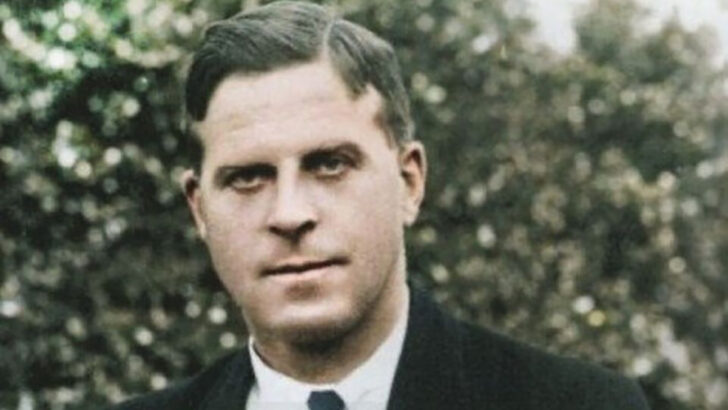
 James Ryan colourised version
James Ryan and the development of independent Ireland,
by Michael Loughman
(Four Courts Press, €24.99 / £22.50)
By any standards, this is a remarkable biography of a truly remarkable man. James Ryan was born into a large, comfortably off farming family in Wexford on December 6, 1892. A much more low-key figure than either de Valera or Lemass, his legacy is at least on a par with both of these two giants of modern Irish history.

Ryan was the longest serving Minister for Agriculture in the history of the State, but also Minister for Health and Social Welfare, and after that Minister for Finance during the pivotal late 1950s and early 1960s.
In all his portfolios, he left a legacy of constructive policy development, which is detailed through the meticulous research that has gone into the doctoral thesis that is the foundation of this book.
Ryan was a committed nationalist and his anti-British views were nurtured by the contacts he made in university. He was involved in the Easter Rising, was elected to the 1919 Dáil, active in the War of Independence and the Civil War, he served prison time under both regimes.
Ratified
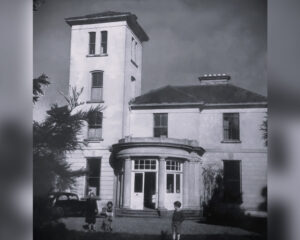
When the Treaty was ratified by the Dáil, James Ryan found himself on the losing side. He had been in Frongoch with Michael Collins. While there, the idea of launching an Irish financial services company was formed. The result was the New Ireland Assurance Company. This is an aspect of the book where some extra details would have been welcome, as it seems that the success of New Ireland helped Ryan in the purchase of the imposing Kindlestown House on 42 acres in Wicklow.
Released at the end of the Civil War, he joined de Valera and Fianna Fáil, entering the Dáil in 1927. When de Valera came to power in 1932, Ryan was appointed Minister for Agriculture, a post he held until 1947.
In Irish economic and agricultural life this was a turbulent period, known as the “Economic War”, which arose over the refusal of the new Irish government to pass on payments under the Land Acts to the British Treasury.
Britain retaliated immediately with a series of measures curtailing the purchase of Irish cattle. Given that this was by far the largest sector of the Irish economy, the effect on farmers was catastrophic.
James Ryan was unusual, especially in a Fianna Fáil context, in not seeing rural depopulation as undesirable”
The previous Cumann na nGaedheal government had been supportive of the cattle trade with Britain, and also facilitated the importation of American maize for pig feed, while the dairy industry was encouraged to form co-operative dairies.
Fianna Fáil had a radically different set of agricultural policies. A new Land Act was brought in to speed up land distribution, a critical matter in rural life.
James Ryan was unusual, especially in a Fianna Fáil context, in not seeing rural depopulation as undesirable.
He firmly believed that there were far too many small, uneconomic farm holdings, and wanted to see larger farms with more industrial employment providing jobs for those not able to earn a reasonable living from limited acres; an attitude that made him closer to Lemass than to de Valera.
In contrast to de Valera, James Ryan came from a tradition with a mixed tillage and livestock farm large enough to support and educate a large family.
While the dairy sector was important from a national point of view, it did not match beef cattle as a contributor to the economy: while Germany undertook to buy 15,000 cattle, this paled when compared with the 670,000 that went to Britain.
Ryan introduced a number of measures to ease the crisis. But the cornerstone of the new Fianna Fáil agricultural policy was the concept of national self-sufficiency. Ryan passionately believed in the importance of tillage in creating a balanced farming sector. This is evident in his encouragement of wheat, where the acreage expanded from 23,000 acres in 1932 to over ten times that area 255,000 acres in 1936.
By then, with a European war threatening, a “coal for cattle” pact with Britain was negotiated. Ryan was central to these negotiations, and it was clear that de Valera as Taoiseach trusted his competence and commitment. These qualities were to be further tested as the events of WWII unfolded.
The war did not provide anything like the same increase in farming prosperity that had occurred during the 1914-1918 period. With Ireland following a path of neutrality, Britain effectively blocked supplies of coal, wheat, animal feedstuffs and fertiliser to Ireland.
Challenges
While Ryan energetically looked for cabinet support for increased funding, the challenges were enormous. Pig numbers halved in the absence of cheap American maize. National self-sufficiency was an absolute priority rather than a political choice.
Despite a significant milk price increase in 1942 under pressure from a new farmers’ party, Clann na Talmhan, cow numbers dropped significantly; while the new party blamed Ryan for influencing a delay in land divisions. Though Ryan held his seat in the 1943 election, the overall Fianna Fáil vote was significantly down.
Nevertheless, the supply of food in Ireland was far better than in most of continental Europe and in the immediate aftermath of the war, the Irish government provided £3 million worth of aid, mainly as foodstuffs to some continental countries.
After the war, a major government report into the future of Irish agriculture was published. A minority report called for greater emphasis on self-sufficiency; but the majority one, backed by Ryan, not only recognised agriculture as the backbone of the Irish economy, but also emphasised the dual importance of a vibrant tillage sector as well as a strong export-orientated livestock industry.
A restructuring of the pig industry and the third, despite opposition, proposed that ‘compulsory tillage remain a permanent feature of government policy’”
In many ways this echoed his own background, but by that stage he was tiring of the agricultural portfolio. Recognising his achievements and hard work during an exceptionally turbulent period, de Valera in the reshuffle of early 1947 made James Ryan Minister for Health and Social Welfare.
Just before Ryan’s departure from his post as Minister for Agriculture, the Department, under his guidance produced three white papers outlining the policies necessary for the advancement of Irish agriculture.
The first proposed offering long-term, guaranteed prices for dairy produce, the second – a restructuring of the pig industry and the third, despite opposition, proposed that “compulsory tillage remain a permanent feature of government policy”.
Realistic
In assessing Ryan’s long term as Minister for Agriculture, it is clear that he had a realistic view of what policies were appropriate for the extraordinary circumstances of the day. While he regarded organised farmers as essentially political opponents, clearly, he thought deeply about the industry and its development in a changing Ireland.
When he left the Department of Agriculture, many thought his main work was finished, but in fact he was to have a profound influence on both health and social welfare policy, while his final key role as Minister for Finance in the crucial years of 1957 to 1965 were arguably the years when Ireland’s economic prospects were radically transformed from emigration and stagnation to the optimism and openness that paved the way for EU entry.
His move to Health and Social Welfare coincided with a broad acceptance across Europe that the state was going to become more involved in the provision of services to its citizens – both in the matter of pensions, widows and orphans payments, as well as unemployment assistance.
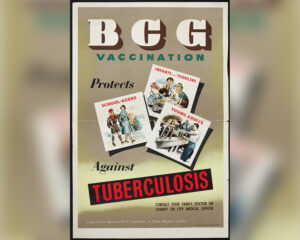
These needs were mirrored on the health side where Ryan wanted free healthcare for mothers and children up to the age of sixteen, as well as sweeping powers to control infectious diseases, of which tuberculosis was by far the most devastating.
While at this remove most of the credit for advances in these areas often goes to Noel Brown, who was Minister for Health in the coalition government of John A. Costello from 1948 to 1951. The hugely important role of James Ryan has been largely overlooked.
He diffused the bitter rows which Noel Brown waged with the Catholic Church and the Irish Medical Association and worked out agreements containing some compromises with all the main parties.
He diffused some of the bishops’ arguments by maintaining that there was a difference between the church’s moral teaching, which he would respect and adhere to, and its social teaching where the State broadly had responsibility.
Noel Brown himself declared Ryan ‘the cleverest parliamentarian of all’, but in many ways James Ryan’s most lasting contribution to Irish life was still to be made”
At this remove, it is extraordinary how involved the hierarchy was in discussing how far free medicine should be available, and to whom and how. They were in effect made use of by the Irish Medical Association to maintain as much private, fee-paying medical care as possible.
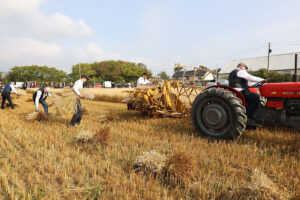
The establishment of the Voluntary Health Insurance board was carried out by the coalition government in 1954 which, in effect, preserved private medicine for the doctors with the more affluent paying the bill.
On the other hand, there was a widespread recognition that a universal free health service for all was too expensive for the country to afford regardless of the opposition of doctors and bishops.
At the end of the day, 85% of the population had more equitable access to free healthcare with the introduction of medical cards. Later, Noel Brown himself declared Ryan “the cleverest parliamentarian of all”, but in many ways James Ryan’s most lasting contribution to Irish life was still to be made.
When Fianna Fáil returned to government in 1957, de Valera again became Taoiseach. It was a major surprise that he appointed James Ryan to the most senior ministerial role as Minister for Finance.
Wisdom
While conventional wisdom has it that the combination of the young Secretary of the Department of Finance Ken Whitaker and Sean Lemass propelled Ireland on a completely new economic path, the evidence put forward by the author Michael Loughman paints a convincing picture that Ryan was in fact the key ally and co-worker in charting a new economic direction for the country.
When Ryan began his first day in his new Department, he was presented with a memo from Whitaker saying “the policies we have hereto followed have not resulted in a viable economy”. He made clear that the policy of protectionism had stymied both agricultural and industrial production.
He added that if economic production was not improved “it would be better to make an immediate move towards reincorporation into the United Kingdom”.
I had never seen references before this book to the fact that Whitaker was irritated at Lemass’s frequent interference with financial policy”
The economy was in dire straits with high emigration giving a continuously declining population. In many respects, Ryan’s first budget was a watershed and built on an initiative hesitantly introduced by the preceding government: Tax on the profits earned on the export of manufactured goods was to be abolished.
I had never seen references before this book to the fact that Whitaker was irritated at Lemass’s frequent interference with financial policy. It is also clear that Whitaker’s famous memo asking Ryan for permission to prepare “an integrated programme of national development for the next five or ten years,” marked a watershed.
This was the genesis of the programme for economic development which at this remove is seen as the fundamental turning point in Irish economic policy. The core principles of reduced taxation and government spending to be aimed at increasing production rather than social services and reduced protectionism were accepted.
This coincided with an international move towards setting up a European free trade area as well as preliminary moves toward the establishment of a European Economic Community, the forerunner to the EU.
When Lemass became Taoiseach in 1959, Ryan continued in the Department of Finance; the two colleagues were united in their policy to move Ireland towards free trade and away from protectionism, while Jack Lynch in the Department of Enterprise was much more cautious.
Disappointment
The 1960 trade agreement with Britain was a disappointment for Ryan as it only gave incremental improvements to agriculture but it cemented Lemass and Ryan’s view that the ultimate destination was membership of the developing European Community. While de Gaulle’s rejection in 1961 of the British application meant that Ireland’s membership was also delayed, the course was set.
The 1965 Anglo-Irish Free Trade Agreement was much more substantial and marked a victory for Ryan and Whitaker over the more cautious Lynch. With economic growth in the early 1960s there was scope for increased social spending, and Ryan was identified with backing the introduction of free secondary school education which was first proposed by Paddy Hillery and implemented by Donagh O’Malley. James Ryan did not stand again in 1965, but was nominated to the Senate by Lemass. He died suddenly in 1970, just a year after ending his Senate term.
It is remarkable that James Ryan, such a key figure over such a long period, is so little known, or his enormous contribution to the development of modern Ireland so little appreciated. This book has ably filled a vacuum in our knowledge of the development of the Ireland of today.
Matt Dempsey is a columnist on the Farmers Journal