

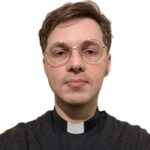
 Fr Dominik Domagala
There is a comforting illusion that faithfulness to God should make our life easier. Many people imagine that if one sincerely follows the Lord, prays regularly, and seeks to live according to the Gospel, then difficulties should diminish and peace should naturally follow. Yet the Bible repeatedly challenge this assumption. The readings for this Sunday present a different reality. They remind us that fidelity to God often carries a cost. Not because God abandons His servants, but because truth has always disturbed those who prefer comfortable illusions. Prophet Jeremiah knew this better than most.
The Struggles (Jeremiah 20:10-13)
Prophet Jeremiah stands among the most tragic figures in the Old Testament. His entire ministry was marked by rejection, ridicule, and suffering. He proclaimed not what people wished to hear but what God commanded him to say. He warned Jerusalem that disaster was approaching, called the nation to conversion, and challenged the false optimism of religious and political leaders.
Predictably, he became unpopular. The passage we hear this Sunday comes from one of Jeremiah’s personal laments. It reveals a man really exhausted by hostility. He hears whispering all around him. His own “friends” watch for his downfall. Enemies wait for an opportunity to destroy him. Even those who appear loyal can be trusted no more. What makes Jeremiah’s suffering particularly painful is that he is not being persecuted for wrongdoing.
He suffers precisely because he is faithful. Sounds familiar? Indeed, this is one of the most difficult experiences a believer can face. It is painful to suffer because of our own mistakes; so it is even more painful to suffer while doing what is right. Jeremiah finds himself isolated not from pagans but from his own people. He is surrounded by those who claim to worship the same God, yet who reject the message God has entrusted to him.
This situation is not confined just to biblical history. The truth be said, every generation produces its own Jeremiahs: men and women who discover that faithfulness sometimes leads to misunderstanding, criticism or even exclusion. Often the opposition comes not from declared enemies of religion but from those who prefer a more comfortable, less demanding version of Christianity. Jeremiah’s struggle therefore remains deeply contemporary. It reminds us that loneliness can become part of our discipleship.
Yet his lament does not end in despair. In the midst of fear and anguish, he declares: “the Lord is at my side, a mighty hero.” This is the turning point. Jeremiah’s confidence does not arise from favourable circumstances. Nothing around him has changed. His enemies remain. The threats remain. What changes is his gaze. He remembers that God is present even when seems silent. Faith does not remove the struggle. Faith transforms the way the struggle is endured.
The Greater Power of Grace (Romans 5:12-15)
At first glance, St Paul’s reading from the Letter to the Romans seems unrelated to Jeremiah’s suffering or to the Gospel’s discussion of persecution. Yet beneath the surface there is a profound connection. Paul places before us two figures: Adam and Christ. Through Adam, sin entered the world. Through sin came death. Humanity became marked by a wound deeper than any social, political, or personal problem. The human heart itself became fractured. Alienation from God gave rise to alienation from one another. Paul’s point is not merely historical. He is explaining why the world often appears resistant to goodness.
The opposition experienced by Jeremiah is not accidental. It is one expression of humanity’s fallen condition. The same wounded nature that led Adam to distrust God continues to manifest itself in every age. The prophet encounters resistance exactly because the human heart is capable of resisting truth. The disciples of Christ in the world encounter persecution because the human heart is capable of rejecting grace. Yet Paul refuses to leave us contemplating this power of sin. His attention quickly shifts to Christ.
What seemed like defeat became victory. That pattern continues in the life of the Church and in the life of every believer”
Jeremiah can persevere because God remains faithful. The apostles can face opposition because Christ has already conquered the deepest enemy. Christians can endure rejection because they know that evil never has the final word. The Cross itself becomes the supreme proof of this truth. On Good Friday it appeared that violence had triumphed over goodness, hatred over love, and death over life. But Easter revealed the opposite. What seemed like defeat became victory. That pattern continues in the life of the Church and in the life of every believer.
Do Not Be Afraid (Matthew 10:26-33)
The Gospel presents us with one of Jesus’ most repeated commands: “Do not be afraid.” These words are spoken within a missionary context. Jesus is preparing His disciples for the task of proclaiming the Kingdom of God. Notice however that He does not promise them popularity. He does not suggest that everyone will welcome their message. Instead, He prepares them for opposition. This realism is striking. Jesus knows that truth provokes resistance. The Gospel challenges human pride, calls sinners to conversion, and exposes false securities.
Social pressure can create discomfort, but it cannot remove the promise of eternal life”
Consequently, those who proclaim it should not be surprised when they encounter hostility. The instruction “Do not be afraid” therefore does not deny the existence of danger. Rather, it places danger within a larger perspective. Yes, people can harm the body, but they cannot destroy the soul. Public opinion can damage reputations, but it cannot separate us from God. Social pressure can create discomfort, but it cannot remove the promise of eternal life. Jesus urges His disciples to view reality through the eyes of faith rather than through the lens of fear. This is why He speaks about sparrows and the hairs of our head.
To modern ears these images may sound sentimental, but they express a profound theological truth. In the ancient world, sparrows were among the cheapest items sold in the marketplace. Truly insignificant. Yet Jesus says that not one of them falls without the Father’s knowledge. If God notices a sparrow, how much more does He notice yourself, created in His image? The point is not that we will never suffer. Jeremiah certainly suffered. The apostles did as well. Most of them died as martyrs. Rather, Jesus teaches us that no suffering falls outside God’s providence. The disciple of Jesus Christ is never abandoned. His follower is never forgotten. Even when circumstances seem chaotic, the Father remains attentive to every detail of our lives.
The Gospel concludes with a challenge that remains urgent especially today: “Anyone [who] declares himself for me in the presence of [others], I will declare myself for him in the presence of my Father in heaven.” Indeed, every age confronts Christians with the temptation to silence. Ours is no exception. This pressure may not always take the form of overt persecution. More often it appears as subtle conformity. There is a temptation to soften difficult aspects of the Gospel, to avoid controversial truths, or to remain silent when faith becomes inconvenient. Many Christians are willing to identify themselves with Christ privately but hesitate to do so publicly. Faith is confined to the church building, while professional, social, and cultural life operate according to different principles. Yet authentic and true discipleship cannot remain hidden indefinitely.
Behind the hostility of the world stands the providence of the Father. Behind the weakness of humanity stands the grace of Christ. Behind every act of faithful witness stands the promise of eternal life. For this reason the Christian can face opposition without bitterness, loneliness without despair, and uncertainty without fear. The Lord who sustained Jeremiah, who transformed Adam’s tragedy through Christ, and who strengthened the apostles in their mission continues to accompany His Church also today. Therefore, amid every challenge, every rejection, and every trial, the words of Christ remain as relevant as ever: “Do not be afraid.”
Fr Dominik Domagala acquired a Master’s in History of Liturgy and obtained a Licentiate in Sacred Scripture at St Patrick’s College in Maynooth. His main interests concern the OT and Books of Maccabees. He is the author of “The Social Sermon” blog on Facebook, Instagram and YouTube. Check out more at the website: thesocialsermon.com