 Photo: Pexels.
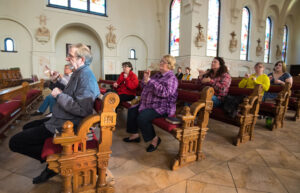
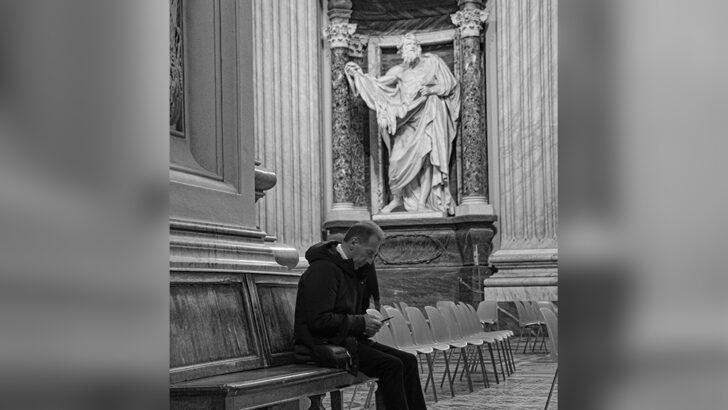
 After almost every Mass, I notice something disturbingly common. As parishioners leave the church, many reach instinctively for their phones. Conversations are interrupted by beeping notifications. Some pause to check messages before greeting friends. It might seem like an insignificant routine. Yet it makes me wonder: if a digital device fills every spare moment, what happens to the quiet sacred spaces where God often speaks?
It happens to most of us. One notification leads to another. We glance at the headlines, reply to a message, watch a short video, browse social media, and before we know it, precious time has quietly slipped by. It may appear trivial, yet moments like these reveal something profound about the age we live in.
Influenced choices
Artificial intelligence has brought extraordinary convenience into our daily lives. It helps us navigate driving, recommends restaurants, organises our calendars, drafts emails, summarises documents and answers questions in seconds. Increasingly, AI also decides what news we see, what videos we watch, what products we buy, and even how we express our thoughts.
Ironically, contemporary AI systems are algorithmically programmed to learn our preferences and hold our attention. Social media platforms discover what keeps us scrolling. Streaming services predict what we will watch next. Online retailers anticipate what we are likely to order. AI assistants excitedly recommend where to go, what to read, what route to take and even how to reply to our emails.
The question is not merely what AI can do, but who we are becoming through the technologies we build”
These technologies are wonderful gifts when used wisely. Yet Pope Leo XIV poses a critical question in Magnifica Humanitas that reaches beyond the technology itself: “The question is not merely what AI can do, but who we are becoming through the technologies we build.”
The greatest challenge posed by the artificial intelligence environment is not simply whether machines will become more intelligent. It is whether, in our pursuit of convenience and efficiency, we gradually surrender the habits that make us deeply human.
Freedom to be human
Much public discussion on AI focuses on misinformation, deepfakes or loss of jobs. These are genuine concerns. But there is another danger that receives far less attention: the quiet erosion of our interior freedom.
Christian tradition has always understood freedom as something far richer than simply having unlimited choices. True freedom is the ability to govern ourselves, to choose what is good, and to act according to conscience. As the Catechism reminds us, “The more one does what is good, the freer one becomes” (CCC 1733).
Habits influenced by external factors gradually diminish that kind of freedom. Freedom is rarely taken from us by sudden force. More often than not, we surrender it – one distraction at a time.
These are great tools to make our lives easier; however, the problem arises when convenience slowly becomes dependence.
Students now stop wrestling with difficult assignments because AI instantly produces polished answers. Professionals rely on automated recommendations instead of exercising their own judgement. Many of us instinctively reach for our phones during every spare moment, unable to tolerate silence, waiting or even boredom.
Without realising it, we have begun outsourcing our thinking.
In the image of technology
Pope Leo XIV warns that technology is shaping not only society but also the human person. The issue is not simply what these systems can accomplish, but the habits they cultivate within us. Every technology forms us in some way. The question is whether it forms us into wiser, freer and more compassionate people.
Our attention has become one of the most valuable commodities in the digital economy. Technology companies invest enormous resources to keep us engaged for as long as possible. Notifications, sales, personalised recommendations and endless scrolling are carefully designed not simply to entertain us but to capture and retain our attention.
St Paul warns us: “Do not conform yourselves to this age, but be transformed by the renewal of your mind” (Romans 12:2). Renewal requires reflection, which in turn requires silence. Yet silence has become increasingly rare nowadays.
When every empty moment is filled by another notification or AI-generated suggestion, we have very little time for reading, contemplation, prayer or conversation. God often speaks to us through the stillness of our hearts. If we remain hypnotically ‘connected’ almost all of our waking hours, we risk losing the interior space where we discern and grow in wisdom.
Pope Leo XIV observes that we increasingly ‘interact with machines as if they were interlocutors, and thus become almost an extension of them’”
A growing concern is the epidemic proliferation of digital addiction amongst young and old. Many people admit that they feel anxious when separated from their phones, a new condition called nomophobia (short for “no-mobile-phone phobia”). Others find it difficult to complete a meal, a conversation or even a period of prayer without checking for updates. Technology has become so seamlessly ingrained into our lives that we scarcely notice how much it shapes our habits.
Pope Leo XIV observes that we increasingly “interact with machines as if they were interlocutors, and thus become almost an extension of them.” His words invite us to pause and ask an awkward question: are we still using technology as a tool, or is technology beginning to shape us in its own image?
Uniquely human
Human beings are capable of love, compassion, forgiveness, creativity and hope. We possess conscience, moral responsibility and the freedom to choose to do good. No algorithm, however sophisticated, can truly exercise these uniquely human capacities.
Wisdom does not emerge from faster computation. It grows through experience, relationships, humility and prayer. As Proverbs reminds us, “The fear of the Lord is the beginning of wisdom” (Proverbs 9:10). These are intrinsic qualities that cannot be replicated or automated.
That does not mean that we shelve or reject artificial intelligence. AI will continue to transform medicine, education, science and countless other fields for the better. The Christian response is not fear but stewardship.
Defending our humanness
We must learn to use technology without allowing it to master us. That might mean protecting moments of silence each day, creating screen-free family time, teaching young people to think critically rather than merely accepting automated answers, and ensuring that our churches remain places where listening, presence and prayer take precedence over digital distraction.
Above all, we must re-capture and preserve the freedom to think, discern and choose responsibly.
May we embrace the gifts of AI with gratitude and wisdom, while guarding the freedom, conscience and moral responsibility that God has entrusted to each of us”
Every generation faces technologies that promise greater power and productivity. Our generation must ensure that greater power does not come at the cost of diminished humanity.
As Pope Leo XIV reminds us, the ultimate question is not what our technologies are becoming, but what we are becoming through our growing engagement with them. May we embrace the gifts of AI with gratitude and wisdom, while guarding the freedom, conscience and moral responsibility that God has entrusted to each of us.
In the end, the greatest achievement of the AI age will not be building smarter machines, but remaining fully human.