

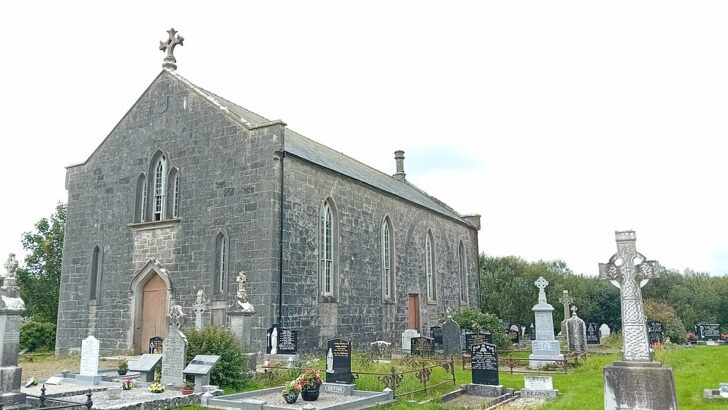
 Photo: Wikimedia Commons.
 The Irish Church does not do managed decline. It never has. It lets the clock run down, keeps the show on the road for one more season, and then eventually presents the result — a parish has to be merged or a college closed, the community and or staff quietly told the numbers have run out, nothing could be done, it was as inevitable as the weather, hands are wrung, the world moves on. We are masters of the fait accompli and strangers to planning and strategy.
And yet managed decline — deliberate, clear-eyed, chosen rather than suffered — is precisely what we now need, and we need it urgently. We need to face the decline, not embrace it like an unfortunate man getting a bad diagnosis and giving up.
The trouble is that almost no one in the Irish Church is in a position to say this, and it is worth being honest about why.
Consider our leadership. Our bishops were ordained to be priests — to preach, to anoint, to bury, to care for the souls of their flocks. Some were later asked to lead, and took up the crozier in good faith. They were asked to lead, govern as stewards of a diocese and be a father to their priests. Bishops get little training and certain none that would train them to preside over the managed contraction of a once-dominant Church, potentially closing the buildings their predecessors raised as beacons of hope in famine times, telling the faithful that the ancient diocesan and parish maps must be redrawn, parishes merged to prevent closure — none of this was ever in the job description. We are asking men formed for the care of souls to perform institutional triage, and then wonder that they might flinch from it. It is not cowardice. It is being asked, late in the day, to do a job no seminary ever prepared them for.
Take the laity. For many there is no urgency — only the assumption that the parish will always be there, as it was for their parents and their parents before them. They will not feel the ground move until the morning it gives way: until the doors are locked on Christmas Day and the lights do not come on for a funeral, and the shock of it arrives all at once, for a loss that was plain to anyone who cared to look. They will be the ones to protest the loudest, the ones who rarely if ever contributed and turned up once or twice a year and never gave a thought as to who pays for the heating and lighting and upkeep yet feel entitled to everything for free as if it was a constitutional right.
A smaller number of laity are loyal to their parish and contribute as volunteers and financially to keep it healthy and running. They turn up for meetings and consultations and are energetic but ageing. They want to do more and see the value in a faith led community and mourn the loss of faith, in their community but also in their families. But they know in their hearts what lies down the road in a contracting church and yet everyone hopes it will be somewhere else that takes the pain first, someone else who will take the decisions. We all are whistling past the graveyard if truth be told.
And consider the clergy who remain — overworked, depleted, covering three or maybe more parishes where there was once several young priests. Among them is a quiet resignation. Yet courage is bound up with their daily witness: they are the band still playing as the lifeboats are readied, holding the liturgy steady and the sacraments flowing and the familiar music going; they too know that decisions will be made that will be out of their hands. We owe them far more than we have given them. All we seem to have for them now as they age is more work. That’s grossly unfair and clearly unsustainable.
Binding all three together is a single unspoken hope: that the wave now gathering like a tsunami on the horizon will not make landfall or at least not in our lifetime — that the reckoning can be left to a successor, another generation or that something will ‘come up’ and avert it all. This is human nature – ‘deliver us Lord from this’ we pray. This is not a viable strategy.
So let us say plainly what is needed. We need leadership willing to name the reality aloud and to act on it —it’s decision time, not just in individual dioceses but nationally. Manage the decline now, while there still are clergy, financial resources and lay volunteers.
The conversations, the consultations, the listening processes, their time has ended. The National Synod in October wants us to acknowledge our baptism- then let the laity stand up for what is theirs by baptism. Let the clergy stand with them and together with the bishops make the plan, for a strategic withdrawal, a managed decline, a brave strategy with a vison of what lies at the end of it. A smaller church that still has clergy, volunteers and ample financial resources to renew its people, capable of mission, can be ours. God knows it will be painful; the pruning will be severe, but the hope, the true hope born out of a well-conceived strategic plan and vision for a renewed minority Irish Church, now that’s something worth dying a little for.