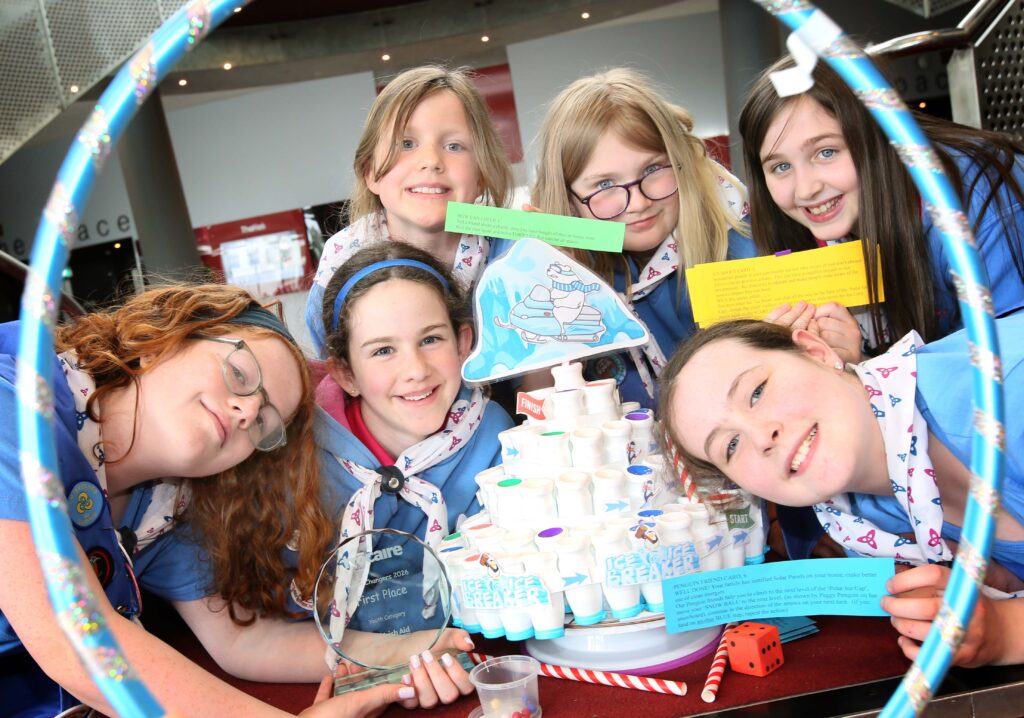
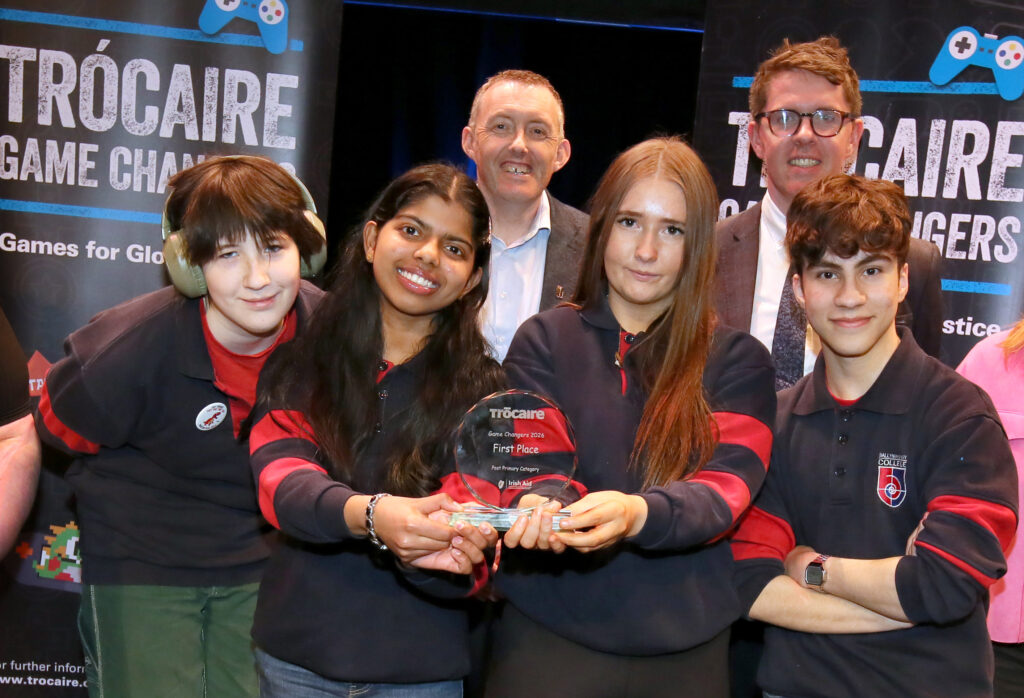
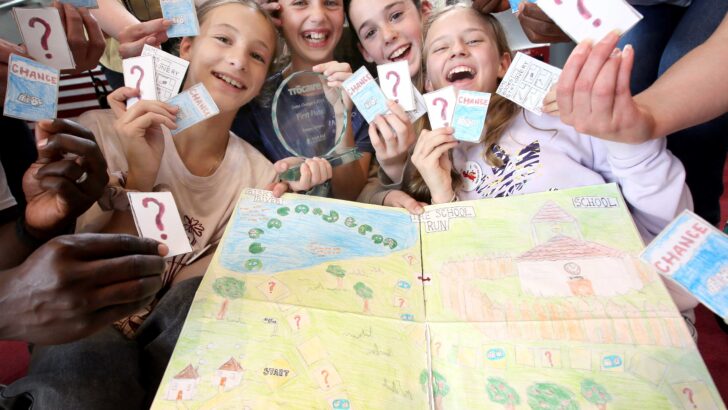
 NO REPRO FEE 29/4/2026 Students Livia, Charlotte, Eve and Rebecca (surname withheld for safety policy reasons) from Monkstown ETNS, celebrate after winning first prize in the Primary School category for the game they created 'The School Run' at the national final of Trócaire’s Game Changers competition in The Helix, Dublin. The competition challenges young people to explore global justice issues through creative game design. Young people are increasingly aware that they will be among those most affected by the crisis in the years ahead. PHOTO: Mark Stedman
 Young people in Ireland are moving from climate concern to action through creative learning initiatives, according to organisers of Trócaire’s Game Changers competition, which held its national final in Dublin this week.
A recent survey by ECO-UNESCO found that 97% of young people in Ireland are worried about climate change. That concern was reflected at the sixth annual Game Changers competition, where students from across the country presented original board and card games exploring climate justice, sustainability and global inequality.
Stephen Farley, one of the organisers of the initiative, said the process of designing games helps students develop a deeper understanding of complex global issues.
“They have to become a certain level of expert about the issue in order to make their game work,” he told The Irish Catholic. “The feedback that we get from teachers and educators would tell us that the young people come away knowing a lot more about the issue because they’ve had to engage with it in such depth.”
The competition, which received more than 270 entries this year, asks primary school, post-primary and youth group students to create games focused on global citizenship and justice issues. This year’s theme centred on climate change and climate justice.
Mr Farley said the initiative was designed not simply to raise awareness, but to help students feel capable of responding to the crisis.
“If you give young people the opportunity to do something about it, you can move them from being worried about climate change to being active,” he said.
One of the winning post-primary entries, Filtrace from Ballymakenny College in Co. Louth, challenged players to build a functioning water filter while answering questions about climate change and water scarcity.
Players collected materials such as gravel, sand and gauze as they progressed through the game, which linked changing weather patterns and drought to difficulties accessing clean water in developing countries.
“The whole game was about solutions,” Mr Farley said. “It wasn’t just about identifying problems. Students were thinking about what actions could actually help communities respond.”
Mr Farley said students increasingly understand that climate action goes beyond individual lifestyle choices.
“You see games about recycling and personal responsibility, but you’re also seeing more sophisticated ideas coming through — recognising that governments, companies and international cooperation all have a role to play,” he said.
He added that young people are often underestimated in their ability to grapple with difficult subjects.
“We sometimes think we need to protect students from these issues, but I just don’t see that,” he said. “Young people can cut through the nonsense very quickly and get exactly to where they need to be.”