

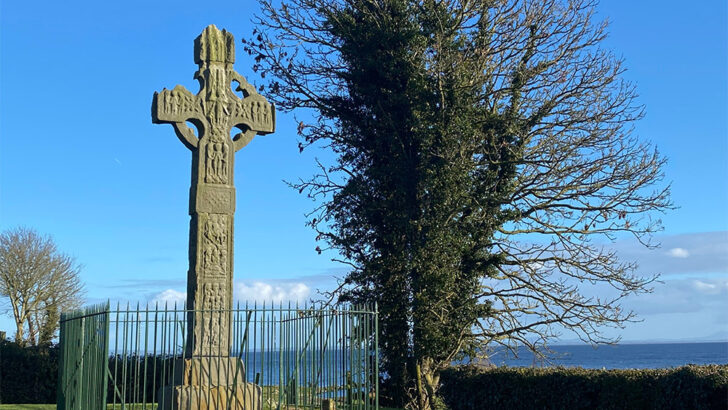
 Ardboe cross
 Since September 2021, we here in Ireland have been on a synodal journey with our brothers and sisters across the globe. Over nearly four years of listening, dialogue and discernment, we have been learning what it means to walk, listen and decide together as Church.

One of the biggest challenges has been the complexity of the Synodal documents and the lingering question around what these years of reflection actually mean for how we live as Church in our parishes today. Pope Francis reminded us repeatedly that this is not just a passing trend but a recovery of something deeper and more ancient, something rooted in the very person of Jesus.
I believe synodality lives in the very soul of the Irish Church and that it is something we already carry in our bones, something woven into the very DNA of nearly two millennia of faith and story. In many ways synodality is not something new to learn, but something we are called to remember and recover. In this piece, I reflect on how we can embrace the synodal path at grassroots level where faith is lived each day in our parishes and communities.
Synodality, in the DNA of the Irish Church
In “St Kevin and the Blackbird”, the poet Seamus Heaney wrote: “We are here to carry each other, if only for a while.” At the heart of Irish life lies a deep respect for family, community and the bonds that hold us together as a people and as a Church. In this way, we already live out the core values of synodality, instinctively caring for the least, the lost and the last when times get tough. Even in today’s fast-paced, ever-changing Ireland, people continue to honour these connections with compassion and a willingness to show up when it matters most. This instinct is captured in the Irish word meitheal, which describes the traditional practice of communal cooperation and mutual aid which lies at the heart of Irish community life.
Whether helping a neighbour, responding to crises, or supporting the Church’s mission this generosity shows who we are”
Meitheal, the instinct to rally around those in need, remains central to parish life and Irish identity. As The Irish Examiner reported in March 2024, Ireland is still the most generous country on GoFundMe with five million donations and nearly €250 million raised. Dr Gemma Donnelly-Cox put it beautifully saying: “Coming together swiftly to assist those around you underscores the unique generosity of Ireland.” This same spirit thrives in the Church where Irish Catholics give more per person to Peter’s Pence than any other major donor nation. Whether helping a neighbour, responding to crises, or supporting the Church’s mission this generosity shows who we are: a people where family, community and living the Gospel in real, concrete ways truly matter. This, I believe is what lies at the very heart of synodality.
The soul of place
In Irish, anam an áit, the soul of the place, speaks of the land as a living body: rivers like veins, hills like shoulders, the earth alive with memory. The Church should be the same: one body, alive and rooted in the here and now yet greater than any one of us. The Synodal Pathway invites us to see our parishes this way and build faith communities where every person matters, every voice counts and every baptised person can reach beyond themselves in hope.
At its core, synodality is a theology of culture, one that recognises the Holy Spirit at work in every person, story and tradition of the Irish Church. Each parish is called to cherish its grassroots life, honour its distinctiveness and yet remain connected and in relationship with the wider Church, holding the global and the local in creative tension. If the Spirit’s movement at parish level is the foundation of our Synodal Pathway then what paths now need to be carved out?
Three paths for our journey
The Synod points us to three paths: Communion, Participation, and Mission, but what do these words mean?
Communion reminds us that we belong to one another. We are not solitary pilgrims but companions on the road, called to heal what is broken, restore trust and open our hearts to all. Who in our parish feels unseen or unheard? How can we make everyone feel at home?
Participation means every voice matters. The Holy Spirit speaks through all the baptised not just a few. We are called to recognise the gifts of everyone including women, young people, those on the margins and to share leadership. What gifts lie hidden in our parish and how can we use them to build shared responsibility?
Mission sends us out into the world. We do not gather just for ourselves but are sent into homes, workplaces and streets to bring hope, justice and love. As Jesus says: “As the Father sent me, so I send you.”
A good place to start is to ask: Where is God sending us this week and what is He asking of us here in our parish?
Synodality, a way of bbeing Church
Synodality therefore is not just an event, a reform, or a series of meetings but a call to recover an authentic way of being Church, one that asks how we can listen more deeply to each other and to God’s Spirit in order to change our parishes in ways that reflect today’s Ireland with its diversity, digital connections, and challenges. At its heart synodality asks: How our parishes can become places where anam an áit shines through in ways that are alive with faith, welcome and belonging?
A prayer for the road together
Lord of our hills and hedgerows,
You planted faith in our hearts and gave us one another for the journey.
Help us to see Your Spirit in the faces around us, in neighbour, stranger, priest and child.
Help us to listen with soft hearts, speak with courage and walk with hope.
May our parishes be like fields in spring, open, fertile, full of possibility.
And may we remember that this land, this Church, this people
are Your body here among us, alive with grace, alive with You.
Amen.
Whether helping a neighbour, responding to crises, or supporting the Church’s mission this generosity shows who we are: a people where family, community and living the Gospel in real, concrete ways truly matter”