

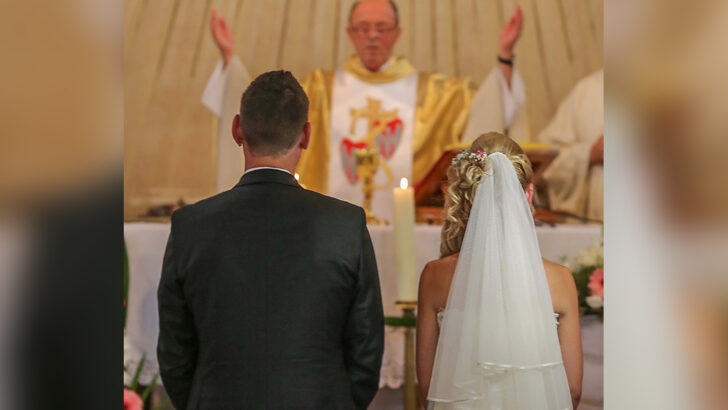
At every wedding I have celebrated, before they exchange their vows, there is one question I ask of the couple which always strikes me. “Will you accept with love the children God may send you?” Without hesitation they reply “Yes.” It is a beautiful moment, but what strikes me most is the weight of that question. The young couple, glowing with the joy of their wed[1]ding day, cannot yet imagine what that ‘yes’ will mean, or how deeply it will shape and challenge their lives in the years ahead. Over the summer months I have been reminded repeatedly of the weight carried by parents and how that ‘Yes’ on their wedding day can impact on their lives. A priest friend of mine in the North has been walking with the parents of a man who killed his wife, two children, and then himself. They are grieving the loss of their son, daughter-in[1]law, and grandchildren—while also carrying the dreadful reality that it was their own son who caused the tragedy. I thought too of friends whose 23-year-old son was told a few weeks ago that he will need a heart transplant to save his life. I met up with two other friends who are broken hearted because their daughter’s marriage has broken up after only a few years.
Impact
Perhaps the encounter which left the greatest impact on me this summer was with a father I visited, caring full-time for four adult sons with serious medical challenges, his wife having died of cancer last year. He told me simply: “Without my faith, I could not face each day.” What is the greatest sorrow of a parent? Surely it is knowing that, however much they try, they cannot keep their children from pain. Parents warn, guide, and protect, but they cannot shield their daughters and sons from illness, broken relationships, or life’s inevitable hurts. So, what can they do? They can give their children tools for resilience. They can hand on values and inner strength, hoping their children will grow strong at broken places. They can pray. And they can keep faith. That word—faith—is crucial. A few weeks ago, at Mass the second reading spoke of Abraham and Sarah. They “went forth” into an unknown land and an unknown future. Abraham looked forward to a city with foundations; Sarah looked forward to grandchildren she never expected and, in truth, never lived to see. They were asked to plan for a future they would not enjoy, to scatter hope they would never harvest, to give love that might not be returned in their lifetime. That is the nature of faith: trusting God at every turn, looking beyond the present moment. How different that is from fatalism. Fatalism shrugs its shoulders and says: “This is all there is.” Faith, however, believes there is more— more than the suffering of today, more than the disappointments of this hour. Faith looks to the future despite the present. Culture It is not easy to keep faith in our culture. We are encouraged to focus on the here and now, to want everything instantly, to avoid taking the long view. Yet Scripture invites us to live differently. To have children in uncertain times is an act of faith. To create beauty in a vulgar age is an act of faith. To pray for a son or daughter who has strayed is an act of faith. To keep going to Mass when others mock it is an act of faith. To hold on to values in a cynical, value[1]less world is an act of faith. Each of these small acts is a seed sown for the future. We may never see the harvest—but God will make it fruitful. Abraham became the father of many nations. Sarah, long thought barren, rocked her child on her knee. So, if you are carrying brokenness or sorrow, take courage. Trust as Abraham and Sarah trusted. Plant seeds of compassion, fidelity, and prayer. Stay faithful when it is hard, loyal when it is mocked. Remember always—we are only instruments in God’s hands. And He is in charge