

 Station Island. Photo: Lough Derg
 Pilgrim paths across Ireland are set to come alive this Easter as part of Pilgrim Paths Week 2026, a nationwide series of guided walks celebrating the country’s ancient routes and drawing people into a shared experience of reflection, community and renewal.
From the slopes of Kerry to the lakeshore of Donegal, the week (April 3–12) brings together a network of historic paths that, while open year-round, take on a particular significance during the Easter season.
Speaking to The Irish Catholic, Fr Laurence Flynn said the continued appeal of pilgrim walking lies in its openness.
“You don’t have to qualify… you don’t have to have any spiritual qualifications to walk a pilgrim path,” he said, pointing to “that sense of openness” as central to their attraction.
At Lough Derg, where an annual Easter Monday walk typically draws between 70 and 80 participants, pilgrims follow a route shaped both by history and careful restoration. Fr Flynn noted that while traces of ancient paved paths once recorded in 19th-century surveys have largely disappeared, a modern pilgrim path was re-established in the late 1990s, allowing walkers to reconnect with a tradition stretching back to medieval times.
Yet for many, the appeal goes beyond history. “There is… the simple joy and the wholesomeness and the spiritual blessing of being out in nature,” he said, adding that in an increasingly digital age, stepping away from screens “rests not only our eyes, but our minds and our heads and our spirits too.”
The physical act of walking, he suggested, speaks directly to the nature of Christian faith itself. “Our faith is one of incarnation,” he said, pointing to the importance of engaging both body and spirit in the journey.
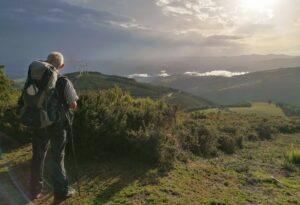
Pilgrim Paths
That sense of accessibility and renewal is echoed across Ireland’s growing network of pilgrim routes.
On St Brigid’s Way, which stretches from Faughart in Louth to Kildare, participants are drawn by both tradition and contemporary relevance. Dr Karen Ward described it as “the only pilgrimage walk in Ireland for a female deity,” attracting “a wonderfully eclectic mix of young and old, men and women and Christians predominantly but also all people of all faiths too.”
Walkers, she said, often speak of St Brigid’s enduring appeal, from her “practical, eco-activist, inspirational, generous ways” to “the huge benefits of walking in her footsteps and those of our ancestors.” For many, the experience offers “time out away from the mundanity of life and hope for the future… especially the wonders of nature.”
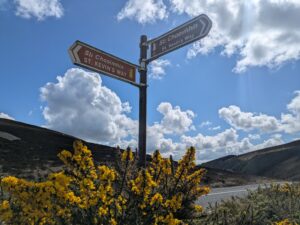
In Co. Wicklow, St Kevin’s Way similarly combines history, landscape and community. Emma Smith described a route that begins in Hollywood and crosses the Wicklow Mountains to Glendalough, retracing the steps of the early Irish saint.
The walk, she said, is sustained by volunteers ranging in age from teenagers to older community members, who guide participants, share local history and even provide refreshments along the way. “We get walkers from all walks of life… people of different religions and none. All are welcome,” she said.
The experience blends the social and the reflective. At the beginning of each guided walk, participants are invited to pick up a small stone and set a personal intention. “It can be anything and is personal to every person,” she said. “Towards the end of the walk… [they] cast their stone into the river and let their intention go.”
Further south, on the Dingle Peninsula, Cosán na Naomh offers a journey through one of Ireland’s richest early Christian landscapes. Fionnán Ó hÓgáin described the route as a medieval pilgrim road linking Ventry to the foothills of Mount Brandon, long associated with St Brendan the Navigator.
Along its 17.7km stretch, walkers pass a series of ecclesiastical and heritage sites, including Kilmalkedar, with its Romanesque church, ogham stones and sundial, and the iconic Gallarus Oratory, one of the best-preserved early Christian structures in Ireland.
In West Cork, St Finbarr’s Way offers a different but equally powerful experience. Beginning at the Top of the Rock in Drimoleague and ending at Gougane Barra, the route traces the journey of St Finbarr through a landscape of river valleys and uplands.
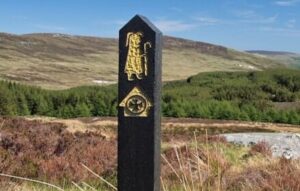
Though it never developed into a major European pilgrimage, it remains deeply rooted in local tradition. Today, its defining feature is not only the scenery but “the kindness of the four local communities” who welcome and support pilgrims along the way.
For Fr Flynn, that welcome is essential to the meaning of pilgrimage itself. Recalling the words of Pope Francis, he said those responsible for pilgrimage sites must resist the temptation to be dismissive of visitors.
“We are not to be suspicious… or say they are only there for a day out,” he said. “If people are really made welcome… that is at the very heart of what it is to care for pilgrims.”
As Easter unfolds, Ireland’s pilgrim paths offer more than scenic walks or historical curiosity. They provide a space—open to all—for reflection, encounter and renewal, rooted in a tradition that continues to find new life with each generation of walkers.
A full list of events taking place during Pilgrim Paths Week (April 3–12) is available at pilgrimpath.ie.