

 Peter Costello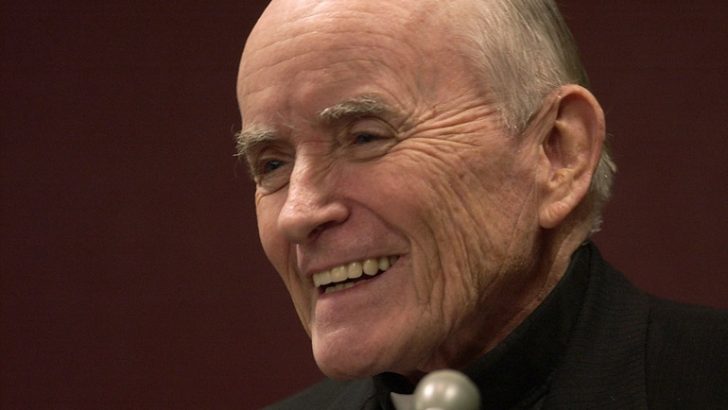
Secrets of the powers that be
In December 1977 the Irish Consulate in Chicago reported its anxiety about the effect of an article that had just appeared in the Chicago Tribune by maverick priest and academic Fr Andrew Greely. This was entitled ‘Ulster a Medieval Nightmare’.
He called it “the last bastion of oppression and torture in Western Europe”.
In bold letters his column proclaimed “it is the black mark against the world press that torture in Chile and Brazil receive so much attention and torture in Ulster is ignored”.
He accepted that power sharing would be the best solution, but when it was tried it was “Protestant extremists brought it down in 1973 with substantial help from the Protestant majorly”.
Mutual friend
Ronan Murphy of the Consul General’s office lunched with Greely early in 1978 along with a mutual friend. Despite his good will towards Ireland Murphy thought he had become bitter about relations between Ireland (represented by the Consul) and Irish-Americans.
His comments on Northern Ireland were mainly cynical. He was under the impression that an opportunity had been lost for “Irish solidarity” focused it seemed in his mind on the publication of Leon Uris’s novel Trinity.
His wife Jill also wrote Ireland: A Terrible Beauty, which had appeared in 1975.
Uris, as much as Greely, was not a writer to let mere historical facts get in the way of a violently dramatic tale. He had scripted Gun Fight at the O.K. Corral (1957), a Hollywood film notorious for its complete disregard for mere historical fact.
Greely was offended by a display of anti-Americanism at the Merriman Summer School. Yet Greely also told Consul Murphy that he had recently been doing research about alcoholism among Irish-Americans but he was “not anxious to publish these finding as they would confirm prejudices which he says exist towards the Irish in America”.
Greely was refused tenure at the University of Chicago because he was a priest and a Catholic; but others thought it was because he was cantankerous colleague. His weekly columns were widely syndicated and, therefore, influential as he was also seen as progressive and hard done by the hierarchy in Illinois.
The consulate thought they should “maintain friendly relations with Fr Greely” even though he had become less than friendly to the diplomats.
The journalism and writing of Greely and the Urises reveals only too clearly the great difficulties which Irish diplomats had in maintain relations with influential people abroad over the troubling events in Northern Ireland.
Old prejudices and legends obscured for many the path to peace. (2016/22/593)