

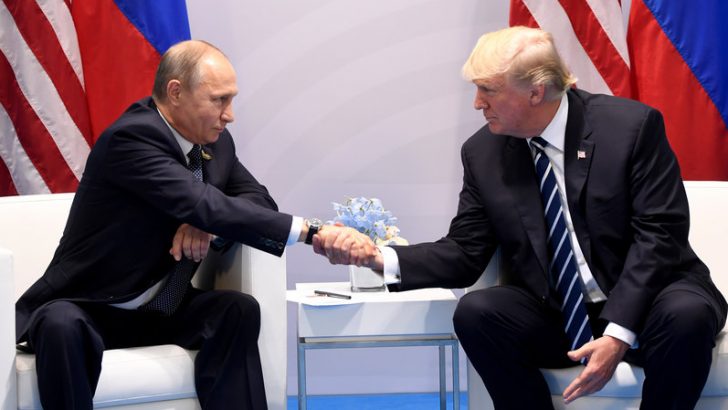
 Russian Leader Vladimir Putin and IS President Donald Trump at the G-20 SUmmit
Selmayr emphasised: “But under no circumstances should we think that we can’t do anything.” However, the EU must learn to speak the language of power. It is important to “stand up robustly to these brutal ‘strong men’. Trump, Putin – they understand the language of power, but also of weakness. Anyone who gives in permanently will never be taken seriously by them. Otherwise we will be humiliated and humiliated.” That’s why counter-tariffs are the right thing to do.
Without economic strength, the EU has little to counter the “strong men”. It is also important to forge alliances of volunteers. “Not every EU state is able or willing to send a military security force to Ukraine.” Reliable alliances beyond the EU are also necessary, and a willingness to compromise is required. “If we want security, we need enlargement,” said Selmayr.
Kretschmer against firewalls
The annual reception with around 200 guests from politics, culture, society and the churches was attended by the Catholic Bishop of Dresden-Meißen, Heinrich Timmerevers, as well as his brother bishops Wolfgang Ipolt (Görlitz) and Gerhard Feige (Magdeburg), whose dioceses also cover parts of the Free State.
Timmerevers thanked those present for their diverse and constructive cooperation. This applies to social, educational, ecological and pastoral issues. Last but not least, the concern for the cohesion of society unites them. The bishop called for the idea of alliances to be brought back to centre stage.