

 Mary Kenny
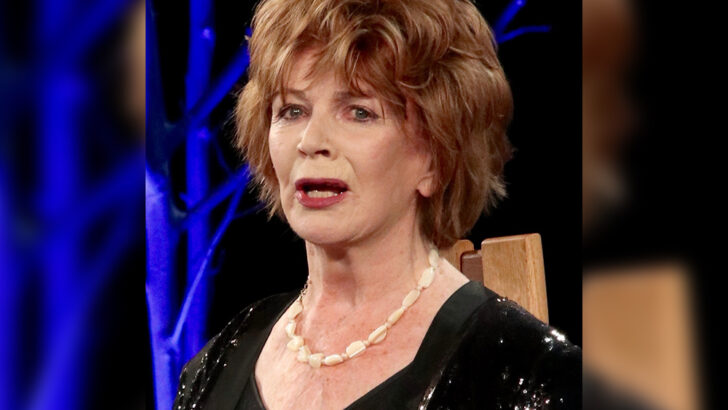 Edna O’Brien. Photo: Wikimedia Commons / Andrew Lih.
 In the screen documentary about Edna O’Brien’s life, The Blue Road, made shortly before her death, the Co. Clare author said that one of her regrets was that she’d been so hopeless at managing money. She’d earned plenty of it, but she’d often been broke just the same.
I’ve experienced, at a lesser level, similar feelings of ruefulness. Throughout my life, I’ve managed money carelessly, not paying attention to the responsibilities it demands. Although I worked for years in Dublin, and made pension contributions, I lost all the relevant paperwork, so I’ve never been able to draw that pension. The bureaucracy of the Department of Social Welfare has been unable to assist – but essentially it’s my own fault.
Tradition
I wonder is this a Catholic thing – arising from a tradition of deploring materialism and being guided by St Paul’s warning that “the love of money is the root of all evil”? How filthy was “filthy lucre”?
And yet Protestants, who revere St Paul, didn’t seem to have the same taboos about managing finances sensibly – as the German sociologist Max Weber underlined.
Or is it an Irish thing, reaching back to the historical roots when poverty was the norm, and the few people who were wealthier might be the object of unwanted jealousy? Sharing was a cultural imperative, and the pervasiveness of ‘the Cavan joke’ was a telling indictment of those accused of keeping their dosh to themselves. Cavan people, who may have had to be frugal, were mocked as misers who “could peel an orange in their pockets”.
Snobbery
There was even financial snobbery among poets and intellectuals. Yeats’s famous contempt for “the greasy till” ran deep.
We now live in a world dominated by economics, and I’m still way behind the curve. I’m so outdated I still write cheques. I can’t master internet banking. If I need to transfer money from my bank account, I write the bank an actual letter. I have no idea what ‘Bitcoin’ is, or how it works. It took me years to grasp the principle of compound interest.
It’s true that the New Testament emphasises that the things of the spirit come first. One’s soul is more important than amassing gold. But there’s surely a balance between money-worship and financial common sense, nevertheless.
***
The Channel island of Jersey has now legalised assisted suicide: any person deemed to have only six months to live (or longer if afflicted by a degenerative condition like Motor Neurone Disease) may choose to have their life ended, from next year.
Jersey is a place for rich people. To qualify for residence there, an individual must have an international income of at least £1,250,000. A portfolio of personal wealth of over £10 million is also welcomed.
I imagine that rich individuals expect to be more in control of their lives, and this sense of autonomy leads to an expectation (or illusion) of control over death. Whenever there have been parliamentary debates about assisted suicide, it’s been pointed out that the poor are far more likely to be vulnerable to being coerced into accepting this doleful measure.
***
The violent murder of Catholic former MP Ann Widdecombe has shocked people in both Britain and Ireland. She’s the third Westminster politician in recent years to have been violently murdered, after Jo Cox and David Amess.
Ann was a stalwart of the pro-life cause, and stalwart, too, in all her moral views, but she never judged individuals. Despite opposing same-sex marriage, and condemning homosexuality, she was great pals with several gay men. She was a serious woman who also liked to have fun, as her capers on “Strictly Come Dancing” amply displayed. Her death was terrible; the Lord rest her soul.
***
The Cork Street Names Campaign, are keen to get rid of the name ‘Victoria’ on the streets of the city. The campaigners, led by former councillor, Diarmaid Ó Cadhla, say that the monarch who reigned at the time of the Famine should not be honoured in Irish street nomenclature.
Street names change regularly, and if the residents of a location are happy to alter their street name, fine. Although it’s just possible that residents may be more concerned with the impact on house prices than the narratives of history.
Yet how puzzling is the cognitive dissonance of republicans who aspire to a United Ireland, and yet seek to erase all British symbols. The agreed basis for abolishing partition is reconciliation between diverse traditions.
This means that a sizeable number of our Northern brethren will honour Victoria as the monarch who presided over a remarkable era of industrial, scientific, medical and educational progress. It’s even being suggested that in a future United Ireland, July 12 will be a public holiday, and the said Corkonians will be enjoined to celebrate the Orangemen’s raucous festivities.