

 Photo: Public domain
 A month on from Christmas, most houses have returned to their ordinary shape. Decorations are packed away. Chairs are back where they belong. The table has resumed its everyday purpose. And yet, for many families, something noticed over Christmas has not disappeared.
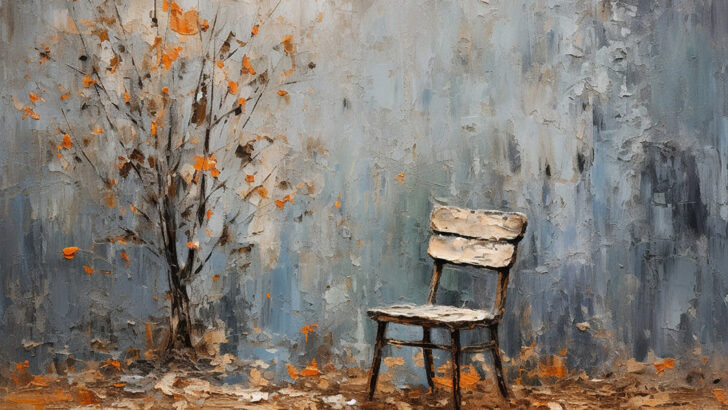
An empty chair.
At Christmas, absences announce themselves. We become acutely aware of who is not there — when the table is laid, when the room quietens after the meal. Now that the season has passed, the chair is no longer remarked upon, but it remains quietly present in memory. January has a way of doing that. It leaves us with what lingers.
Funerals
Every year, I celebrate many funerals. That is not unusual. Priesthood gives us a close view of life’s threshold moments. But something has pressed itself upon me with fresh clarity in recent times. At a significant number of funerals, families are not only grieving the person who has died — they are also carrying fractures that long pre-dated the death.
Brothers not speaking to sisters. Adult children estranged from parents. Long silences where once there had been closeness. A parent who died without the chance to say the one thing that mattered most.
It adds an extra weight to grief. Mourning someone you loved is hard enough. Mourning them while also carrying unresolved words or broken relationships can feel almost unbearable.
Funerals are not dress rehearsals. In Ireland, they happen quickly. Suddenly there are readings to choose, calls to make, notices to write, food to organise, visitors to welcome. If there are tensions within a family, they do not dissolve in those days. Often, they intensify. Priests find themselves carefully holding a space where no one feels pushed aside or exposed.
We are welcomed into homes where grief sits like an unopened letter on the table. We hear stories — tender, funny, painful. Sometimes we are entrusted with what was never resolved: It wasn’t always easy. There was hurt there. We didn’t know how to fix it. And often, someone says quietly, I wish we had tried.
Histories
The truth is, no family is perfect. Every family carries its shadows and complicated histories. There are distances that protect people from real harm, and those deserve respect. Not all relationships can, or should, be repaired in the way we might imagine.
But there are also many situations where silence simply settled in — gradually, unintentionally — like dust. No great argument. No dramatic rupture. Just time, pride, misunderstanding, and the quiet habit of avoidance.
And so, January, with its honesty and lack of distraction, asks something of the living. If there is someone whose absence still aches…if there is someone you quietly avoid…if there is a name that tightens the chest before it reaches the lips…then perhaps this quiet time offers an invitation — not to dramatic reconciliation, not to reopening old wounds — but to something smaller and braver. A card. A text. A candle lit. A prayer whispered: Lord, show me how to begin. Because reconciliation rarely arrives with fanfare. More often, it begins with a softening — a slight turning of the heart back toward the other.
When we speak of those who have died, we often pray, May they rest in peace. But peace is not meant only for the dead. Peace is for the living too. The empty chair reminds us that someday our own place will be empty. The words left unsaid will remain unsaid. The love we do not risk expressing may never be heard.
So perhaps this late January — before Brigid brings the Spring — quietly, gently, without judgement, we might take one small step toward healing what can still be healed and entrust to the mercy of God what cannot. For we believe in a God who holds all our unfinished stories. A God who does not flinch at our failures. A God who gathers what has been broken — in this life and the next — and makes it whole. And maybe that is January’s gift: not resolution, but honesty —and the courage to leave a door open.
Doors
By Carl Sandburg
An open door says, “Come in.”
A shut door says, “Who are you?”
Shadows and ghosts go through shut doors.
If a door is shut and you want it shut,
why open it?
If a door is open and you want it open,
why shut it?
Doors forget but only doors know what it is
doors forget