

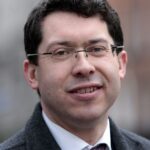
 Senator Ronan Mullen
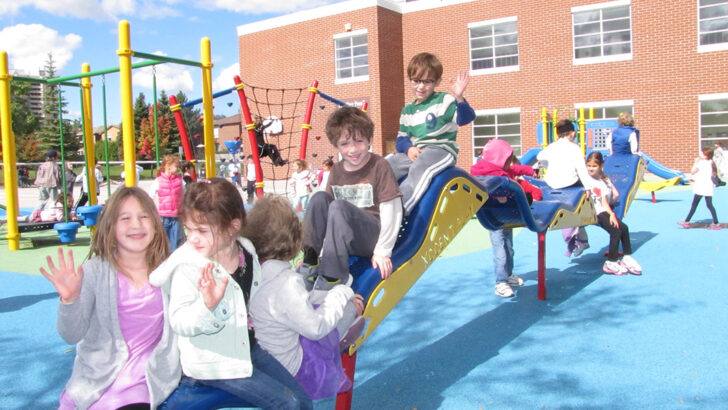 Children playing in a school playground. Photo: Wikimedia Commons / Jlbirman1
 The AI option on my smartphone, where I go to check things fairly often these days, tells me that Nokia is still in the business of making “brick” mobile phones or “flip phones” — the phones you use if you don’t want to bother with the internet, WhatsApp, photos and lots of other apps.
If you have shares in Nokia, I’d advise you not to sell them. Because the evidence is mounting that smartphones have become a plague on the country’s youth, interfering with their sleep and their schooling, shortening their attention span, and blunting their intelligence.
An Irish Times article last week reported a Dublin schoolteacher saying that his students were “exhausted from being up all night on their phones”. This was on foot of a survey by the Irish Times column ‘The Secret Teacher’, who wrote, “If I hurt your feelings, I’m sorry: Since the advent of smartphones, children’s general level of intelligence and attention spans have plummeted.”
A press release on the Oireachtas website tells us that a social media ban for under-16s ‘was not recommended by any of the expert witnesses’”
This echoes the research of social psychologist Prof. Jonathan Haidt, in whose work I unsuccessfully attempted to get the Oireachtas Media Committee to take an interest, ahead of finalising its recent report on “Online Safety”.
Our Committee made some useful recommendations, including turning off harmful recommender algorithms – the technology that identifies what people are viewing and doing online in order to ‘hook’ them on ever more of it.
A press release on the Oireachtas website tells us that a social media ban for under-16s “was not recommended by any of the expert witnesses”. That was a bit disingenuous because I urged the Committee on several occasions to bring in world-leading experts on the impact of social media on children, either in person or on videolink. The Committee even received a submission from Prof. Haidt (author of The Anxious Generation) and The Anxious Generation research team. They recommended that Ireland “introduce a minimum age of 16 for social media account creation, predicated on the presence of harmful design features in platforms, thereby incentivising safer product design.” After the Committee declined to hear from these experts, I included their proposal among a series of recommendations I made to the Committee for its Report, none of which were accepted.
Welfare
To my mind, this makes the Committee look fundamentally unserious when it comes to protecting children from internet harms. You don’t just ignore the offered input of world-renowned researchers and then glibly say, “None of the expert witnesses we heard from recommended a change here.”
The fact is, the Committee farmed out its moral responsibility to NGOs with their own agenda. The Children’s Rights Alliance and the National Youth Council of Ireland, to name but two bodies sucking at the teat of the State and charged with promoting youth welfare, seemed too obsessed with the “right” of children to access information online to notice that children sometimes have to be protected by adults from accessing information that the children themselves might choose to access, but which could harm them. NYCI and CRA would no doubt regard such concerns as paternalistic, but their ideology is trumping children’s best interests here.
So if you think that the Committee failed to do its work properly on this occasion, I invite you to send courteous (naturally) and concise messages to us all (list available on the Oireachtas website) to get us to wake up and take more seriously the dangers children are facing.
**
I attended the very moving National Famine Commemoration 2026 at the Irish Workhouse Centre in Portumna last Sunday.
The dislocation, suffering and death of over a million of our forebears was recalled in powerful narrative, poetry, song and story. Taoiseach Micheál Martin and Minister Patrick O’Donovan addressed the gathering in words that were mostly very well chosen. The noble contribution of the Quakers to famine relief and the generosity of people abroad, including the Choctaw Indians, was recalled. A short prayer was offered at the end by the Head Chaplain to the Defence Forces, Fr Paschal Hanrahan. The catering and hospitality afterwards, appropriately if ironically, was first class.
Commemorations
There was no mention of the role of the Catholic Church however. That is surprising considering what Catholic priests and Protestant ministers did on local relief committees, the tireless work done by priests distributing food, administering the last rites, and caring for orphans, the over 40 priests dying from ‘famine fever’ (typhus) contracted during ministry to the sick, and the role played by Pope Pius IX who in March 1847 issued the encyclical Praedecessores nostros, which urged Catholics worldwide to pray for Ireland and called for collections worldwide to aid the starving population.
People at State and local levels do fantastic work when it comes to these commemorations. Bunreacht na hÉireann acknowledges that the “homage of public worship is due to Almighty God”. But the modern State’s discomfort with faith deprives us of what collective prayer can bring to our commemoration and to our reflection on our obligations today. Somewhere, in the higher echelons of official Ireland, there is unease at acknowledging our religious heritage and a refusal to be generous about the good done by Church people throughout history. All this hinders our ability to confront the problems of the present day.
It must, and will, change sometime.
The good news from the Oireachtas last week was the failure of the Social Democrats’ attempt to remove the three-day waiting period for abortion. It was defeated by two-to-one and it shows that at some level, our politicians are aware of public concern about abortion.
We should be aware of the political game being played, especially by the Left. By trying to make ever wider the grounds for permitting abortion, they distract us from questioning what’s already happening: rising abortion rates, no promotion by the State of positive alternatives, and cruel late-term abortion procedures on grounds of foetal anomaly that are a stain on the medical profession. The Pro Life Campaign does excellent work in lobbying politicians, but also in reporting how they vote. Go online to www.prolifecampaign.ie, find out how your politicians voted last week, and hold them to account.