

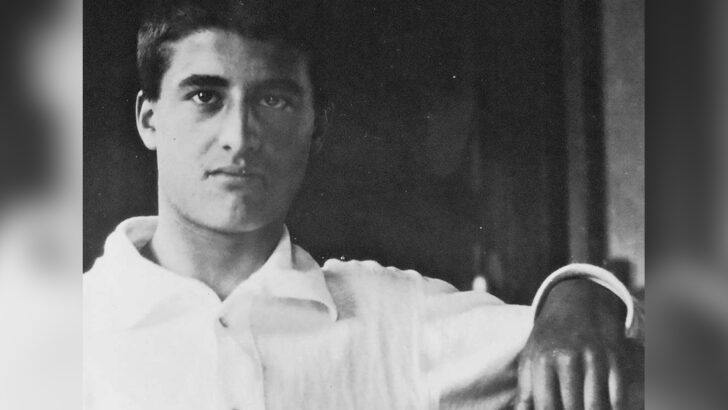
 St Pier Giorgio Frassati
 Last Sunday, September 7, Pope Leo XIV canonised Carlo Acutis and Pier Giorgio Frassati as saints in Rome. There is an Italian phrase associated with Pier Giorgio Frassati that has taken on a deeper significance over time. ‘Verso l’alto’ translates as ‘towards the heights’. It was scribbled by him on a photograph in 1925 and is often inscribed on photos of him taken on mountain tops that he loved to climb.

‘Towards the heights’ is a descriptive symbol, emerging from his love of mountain climbing but one that also reflects the deep interiority of a saint who understood perfectly how friendship with God raises us above our basic needs and desires to a destiny that is beyond what we can see.
In the words of St Gregory, the Great, we long for the grace ‘to see life whole’”
As we climb a mountain, we begin to grasp the breath of the landscape beneath with greater clarity. We see where houses, villages and fields are located in relation to each other; we see where towns-lands and parishes intersect, where rivers flow and where the land meets the sea. With the panoramic view on the mountain top, we have a fuller perspective on the whole of the landscape – a perspective that is only possible from the heights.
This ascending metaphor captures the transcendent nature of human beings. We all have base needs and desires such as food, water, shelter, sleep. We have instincts like preservation, propagation of our species, the desire to love and discover what is true. Yet, there is a momentum that lifts us beyond these things to search for consummation, ultimate meaning and happiness. In the words of St Gregory, the Great, we long for the grace “to see life whole” and how all the chapters of our lives combine to form a singular story. There is an orientation of our lives that either raises us closer to that higher existence or pushes us away from it. The real question, therefore, is what we are tending towards.
As the priest prepares for the Eucharist Prayer, he says to the congregation in the preface: ‘Lift up your hearts…Sursum Corda’”
For Pier Giorgio, ‘verso l’alto’ describes tending towards the summit and fulfilment of all desire which is intimate union with God. His love for climbing mountains was not just about physical exercise but a spiritual experience of transcendence and getting closer to the highest and purest source of love who is God.
It is interesting to note in Scripture how mountain-tops are places of encounter between God and humans. We see it with Moses on Mount Sinai, with Jesus on Mount Tabor and on the hill of Calvary. It is also interesting to note that this sense of elevation and ascension is present in the Liturgy and especially at the Eucharist. As the priest prepares for the Eucharist Prayer, he says to the congregation in the preface: “Lift up your hearts…Sursum Corda”. This beautiful moment in the Eucharist signifies that the true elevation of the human heart is about to take place in the Eucharist where the Body, Blood, Soul and divinity of Christ fuses with our body, blood, soul and humanity when we receive Holy Communion. Here is the summit, the heights for which we are made.
‘Verso l’alto’ expresses what St Pier Giorgio Frassati points us to as pilgrims of hope. He encourages young people in particular not to remain on the ground of their own fears and desires but to recognise a higher destiny to which we ascend with God’s grace to live a noble and beautiful life. Let us sense the movement of the Spirit that lifts us higher and moves us closer to our ultimate destiny of eternal union with Him.
The power of words
This Saturday, the Church celebrates the feast of St John Chrysostom – known as ‘John of the Golden Mouth’ because of the eloquence of his preaching. This gift of John invites us to reflect on how we use words and whether they heal, build communion and unite or whether they hurt, divide and wound. It is also a call to be precise in our language. The philosopher Martin Heidegger once described language as “the house of being” – in other words reality shapes the language we use to describe it. It is a demand of love that we use language of mercy and a demand of truth that we use language that is precise and clear.