

 Martina Purdy
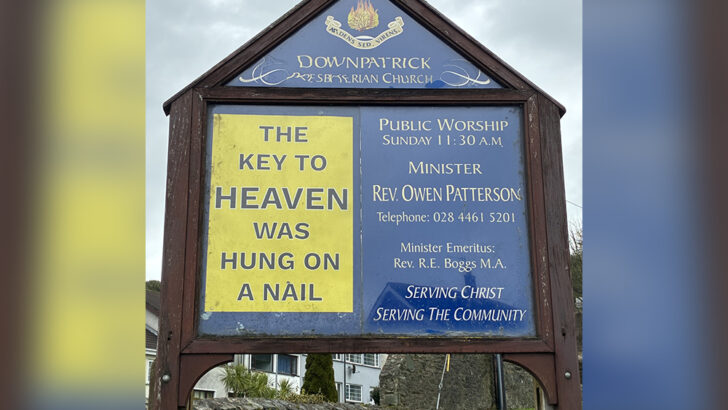 Photo: Martina Purdy
 Memories of being stopped at loyalist blockades haunted my mind as I watched scenes of fuel protests across Ireland. I remember quite well being stopped at Belfast’s Ormeau Bridge, which was blocked off by loyalist women and wee children, standing defiantly. I beckoned the police officer who was standing on the bridge, redirecting traffic. I think it was the removal of the Union Flag from city hall that had sparked the protest. The policeman bent to speak through my window. “Officer,” I said, “can you kindly check my tax disc on the windshield. Is it paid up?” He seemed surprised by the question but reassured me that my tax had been paid. “Then why,” I inquired, “am I the one being rerouted and denied my rights?”
He coldly moved me on.
The Taoiseach Micheal Martin, with the face of an altar boy, warned that the full rigour of the law would be applied”
The loyalists were complaining of a violation of their rights because the Union Flag had been removed from Belfast City Hall though it was in line with the flag policy of all the other city councils in the UK where the flag flew on designated days. Their protest seemed out of proportion – and the police far too accommodating. By contrast, fuel protestors in Cork, Dublin and Galway last week got the sharp end of the law when police and army were called in to break the blockade over rising fuel costs.
The Taoiseach Micheal Martin, with the face of an altar boy, warned that the full rigour of the law would be applied. And in an RTÉ interview, he also complained quite bitterly that much-needed oil could be prevented from coming into Ireland at a time of international crisis. Not only did he call it “illogical” and “unconscionable” he declared: “It’s difficult to comprehend.” Perhaps, only for those who are deeply out of touch or wilfully blind.
Bishop Phonsie Cullinan introduced some words of wisdom – that protest must always be exercised in a manner that respects the rights and needs of others. He also made clear that tax should be just and proportional.
The fuel protestors’ demand for relief at the pump in the face of sharp fuel prices – seemed reasonable.
Government relief measures, announced two weeks ago, had failed to satisfy farmers, truckers and agricultural workers who protested that the tax on fuel was running at an eye-watering 50% (The Lord only asked 10% in tithes). The prospect of paying a further 15% carbon tax in a few weeks seemed to be the last straw. “We are being crucified with tax,” complained one protestor.
Ironic
How ironic that the Taoiseach and five Government ministers had to cancel a trade mission flight to Canada to deal with the crisis. Worries of a carbon footprint never seem to affect the well-insulated elite.
Still, Minister Helen McEntee and her colleagues might have been reminded in Ottawa that a Canadian court ruled that the Government was ‘unreasonable’ when it used sweeping powers to clear the 2022 trucker’s convoy against Covid rules.
As pepper spray was used in Cork, critics found an old tweet of Minister McEntee from 2020 regarding the ‘Black Lives Matter’ protests. “I’ve seen so much footage of armed military in the US attacking peaceful protestors,” she declared. “It’s upsetting, it’s infuriating, it’s hard to watch…”
I was struck by the words of reporter Maggie Doyle during Easter week. “Three days after the Government first indicated the defence forces would be used to bring an end to the fuel protests,” the RTÉ reporter declared, “they arrived.”
On the third day. Ironic really. Christ rose, as he promised on the third day, with the gift of new life, grace and peace. Alas, for our politicians who promise much and tend to disappoint much.
The protest in Dublin was broken and cleared by police on Divine Mercy Sunday, which concluded with the Government holding an emergency meeting and announcing a 500-million-euro package.
Measures include a 10% reduction per litre on diesel and petrol and the postponement of the carbon tax until the October budget.
A priest, reflecting hours earlier on Divine Mercy, said it was in all of us to naturally want to help someone if we see them stumble. Was the Government reacting out of divine compassion or self-interest, in the hope of restoring faith in their leadership?
‘Healthcare put at risk,’ declared Mr Byrne on X/Twitter. ‘Businesses damaged. The vulnerable made more vulnerable. Ordinary people prevented from going about their daily lives’”
A poll by the Irish Independent had indicated sympathy was with the protestors – some 56% backed them. Indeed, almost half those polled blamed the government for the disruption – 46%.
What was particularly galling, frankly, were claims by some politicians, including Tánaiste Simon Harris and Fianna Fáil minister Thomas Byrne that the protest put healthcare in jeopardy. “Healthcare put at risk,” declared Mr Byrne on X/Twitter. “Businesses damaged. The vulnerable made more vulnerable. Ordinary people prevented from going about their daily lives.”
While I have great sympathy for anyone who was kept from hospital, I do not recall this compassionate stance from public representatives during the Covid lockdown when it was blindingly obvious, even to lay people like me, that cancer remained a serious threat to life. Yet it was Covid that we were taught to fear.
An illegal blockade is perhaps not a legitimate form of protest in a state which sprang from violent rebellion, but one might well ask: is 65% tax at the pump a legitimate demand from Dublin?
The Troubles
Throughout the Troubles and peace process, I used to joke with a cousin in Dublin. “How is life in the free state?”- I would ask rather cheekily from Belfast. “Aah, sure, there is nothing free about it – it’s bloody expensive!”
When Jesus is challenged about paying taxes to Caesar, he asks for a coin and notes that it is Caesar’s head on the silver, suggesting that the Jews render unto Caesar that which belongs to him. But most miss the act of defiance in Christ’s words when he says: “And render unto God the things that belong to God.”
Christ denied Caesar the honour of divinity – and made a brave distinction between God and Caesar, a despot who declared himself god.
The political class finally heard the cry of the poor and indeed the hard-working middle classes for whom a few minutes at the pump can be a gut-wrenching experience. The politicians may have had their ‘unconscionable’ taxes, backed up by the police and the army, but deep down they knew they cannot command honour.
***
Apriest at Knock Shrine got me thinking about The 48 Laws of Power. The priest mentioned the best-selling book by Robert Greene in his homily, citing how Peter and John, having performed a miracle at the beautiful gate in ‘Acts of the Apostles’ were quick to give the credit to Jesus, the Risen Lord. “Rule number 1,” said the priest. “Never outshine the master.” After Mass, over coffee with a friend, I checked out the other 47 rules. They include such advice as “Conceal Your Intentions (Rule 3), Use selective honesty to disarm (Rule 12), Crush Your Enemy Totally (Rule 15).” “Enough,” said my friend. “It’s oppressive.” Worse when you have to live with it. Little wonder Pope Leo spoke out at the weekend. “Enough of the idolatry of self and money!” Leo said. “Enough of the display of power! Enough of war!” The media pounced on US President Donald Trump as the obvious target; but surely there is a reason beyond diplomatic niceties that no name was attached. No doubt it is a message for all as it is in our own hearts that wars begin.
***
The Lord Jesus in Matthew Chapter 24 urged us to read the sign of the times – and I must say I was impressed with the apt sign outside a Christian church in Downpatrick. “The key to Heaven,” it declared, “was hung on a nail.”